A VERY WARM WELCOME VISITORS
Showing posts with label Part 3. Show all posts

Thursday, March 1, 2012

Part 3: TRYING TIMES FOR SUNNIS AND SUFIS.


From the Layman’s Desk-15:
Trying Times for Traditional Sunnis and Sufis -Part 3 continued….

IN THE NAME OF ALLAH, MOST BENEFICIENT, MOST MERCIFUL.

One of the many other reasons for shunning Wahhabism is their lack of respect for the Companions of the Prophet (sal Allahu alayhi wasallam).  This is much in evidence from the Volumes of Islamic literature.  Also, Dr. Shaykh Jameel Haleem al-Husayni throws light on this aspect in one of his many Arabic speeches while stating that this is based on the books and documents that the Wahhabis have authored, published and distributed in which they have declared the Companions of the Prophet (sal Allahu alayhi wasallam) as Kuffar:

We know that the Holy Prophet (sal Allahu alayhi wasallam) had said about Abdullah ibn Umar ® that he was a righteous man.  According to Shaykh Jameel, Ibn Taimiyya has stated in his Iqtida al-Sirat al-Mustaqeem, the action of Abdullah ibn Umar ® in seeking blessings (Tabarruk) by praying in places where the Prophet (sal Allahu alayhi wasallam) used to offer prayers between Makkah and Madinah,  is (God forbid!) “Shirk” i.e. associating a partner with Allah!  So according to ibn Taimiyya, this action performed by Abdullah son of Umar ® causes him to exit Islam!!  Again as we know, regarding Hazrat Ali ®, the Holy Prophet (sal Allahu alayhi wasallam) said to his daughter Fatimah ®:  ‘I have married you to the most knowledgeable person from my nation.’   In another book, “The Pathway  of as-Sunnah an-Nabiwiyaah”  (which in fact is the Pathway for the Deviated Sect) what did the leader of the Deviant Sect say on page 42, volume 4 Minhaj as-Sunnah is: Because he embraced Islam at such a young age, there is a difference of opinion whether it is accepted or not.” So Hazrat Ali is (God Forbid!) a “Kaafir” in the eyes of the Wahhabis! [Just like the Kharjites said!]

”Hazrat Bibi Fatimah ®, as we all know, was very close and special to the Holy Prophet (sal Allahu alayhi wasallam).   She was loved by the Prophet (sal Allahu alayhi wasallam) and if she entered the room, he (s) would stand up for her.  In his Minhaj as-Sunnah an-Nabiwiyyah, Ibn Taimiyya said about Lady Fatimah that she has certain attributes of hyprocrites (Munaffiqeen)!!.  In Volume 4, page 65, he says that the Ayah: ‘Do not pray while you are intoxicated,’  was revealed in relation to Hazrat Ali ®.  We all know that Hazrat Ali (R)  had embraced Islam even before the age of puberty and was raised in the same house as the Holy Prophet (sal Allahu alayhi wasallam).  When did he drink alcohol?

“Next, Ibn Baz in his commentary on Fath al-Bari of Imam Hajar Asqalani commented regarding Bilal ibnul Harith al-Muzani ® who was one of the Companions of the Holy Prophet (sal Allahu alayhi wasallam), that the actions he performed were acts of Shirk!  What were those actions?  In the year of the draught, he went to the grave of the Messenger of Allah (sal Allahu alayhi wasallam) and said:  ‘Ya Rasool Allah! Ask Allah to send us rains.  Your nations are in ruins.’

“And now I will show you how they declared Lady A’ishah ®, the Mother of Believers who has been praised in 14 different verses in the Qur’an, as Kaffira (infidel).  Allah cleared her from the accusations of the Hypocrites and declared her innocent.  Allah said about her in verse 6 of the Surat al-Ahzab:  The Prophet is closer to the believers than their selves, and his wives are (as) their mothers.  Hafiz al-Zabidi narrated (in Vol.10 of Ithafus Sadatil Muttaqin) that while she was on her death-bed, our Lady A’ishah ® took out a piece of Holy Prophet’ (sal Allahu alayhi wasallam) garment which she had previously hidden, and said: ‘If I die, bury me with it on my chest, as I am hoping to be saved from the torture of the grave by its blessings,’  and she is the Truthful One, the daughter of  the Truthful one:  Hazrat Abu Bakr Siddiq ®.  She was one of those who were the most beloved of the Holy Prophet (sal Allahu wasallam).   When the Prophet (sal Allahu alayhi wasallam) was asked:  ‘Who is the most beloved to you?’  He replied: ‘A’ishah!’  And then they asked: ‘And from the men?’  He replied:  ‘Her father (Abu Bakr).’   So they are the two most beloved people to the Holy Prophet (sal Allahu alayhi wasallam).  Now this action she has done in which the Qur’an stated that she is the Mother of Believers, the Wahhabis says that whoever does this has associated partner with Allah!  So whom do we follow?  Naturally the Qur’an,  which says that she is clear of bad deeds and clear of being immoral, and that she is the Mother of Believers, and that she is the wife of the Holy Prophet (sal Allahu alayhi wasallam) in this life and the Hereafter – and the Wahhabis say that she has committed Shirk (associated a parter with Allah).” 

”Indeed, the Wahhabis  have declared the most prominent scholars of this nation as Kuffar by their claims that Tawassul and Istigatha (calling out and asking for help in the time of hardship) are all classified as Shirk (associating a Partner with Allah).   As has been narrated by ibn Kathir (who is adored by the Wahhabis since he was a student of ibn Taimiyya) in Kitab al-Bidaya wan-Nihaya  about an event which occurred in 11 Hijri; and ibn al-Atheer  in al-Kamil Fit-Tareekh, and Tabari in Tareekh, all of them narrated that the slogan of the Muslim army (comprising of the Companions and the Tabieen) when Abu Bakr Siddiq ® was the Caliph, when they were fighting the apostates (Musailama The Liar and his army) in al-Yamamah, their slogan was:’YA MUHAMMADAH!’  Who was in this army?  Ali and Khalid ibn al-Walid (May Allah be pleased with them)!  And it was during the time of the Caliphate of Abu Bakr ®.  According to the Wahhabis, Tawassul and the calling out is worshipping other than Allah.  This means that they are associating Shirk to Abu Bakr ®, Umar ® Uthman ® and Ali ® who were there in the army in the battle-field.  Remember that the Prophet (sal Allahu alayhi wasallam) named Khalid as one of the Swords of Allah.  They also thus impute Shirk to other Companions who took knowledge from them.   Thus the Wahhabis have declared the most prominent  Companions and the leaders of this nation as Kuffar and cut the chains of narration in which the Qur’an and the religion has reached us today.  This is because if all the Companions have become Kuffar they can no longer be classified as trustworthy and therefore the Qur’an cannot be taken from them, nor the hadiths nor the religion, and in this case Islam would have been destroyed.  They have not declared just the laymen as Kuffar, but the most prominent figures, the leaders, the Scholars and the Heads of the nation.     They have destroyed our religion by declaring the Companions of the Holy Prophet (sal Allahu alayhi wasallam) as Kuffar.   Ali bin Abu Talib ® was praised by the Prophet sal Allahu alayhi wasallam) in a hadith judged as Hasan-Sahih by Hafiz al-Iraqi in his book al-Mughni and an-haml al-afsal, and it has been also narrated as judged as the same by other Muhaddiths and scholars of Hadith:  The Prophet (sal Allahu alayhi wasallam) said: I am the City of Knowledge and Ali is it Gateway.  And they say he is a Kaffir, and Aishah is a Kaffira,  and Abu Bakr, Umar, Uthman, Ali  and Khalid ibn-Waleed (May Allah be pleased with them all) including the army of Companions and the rest of the Muslim nation.  Who is left as a Muslim on the face of the earth?   So how did the Religion reach them according to their claim?  The fact is, the religion that reached them isn’t the religion that reached them through the Companions but the religion has reached them through someone else: Maybe from Pharaoh, Satan, Qaroon (Korah) or Haman!  How exactly the so-called religion reach them, about which Muhammed ibn al-Wahhab said (in his Kitab al-Tawheed): “Before we renewed the call to Religion, Islam had ceased to exist for 600 years.”  See how they declared the whole nation as Kuffar, by individuals, prominent figures and laymen.”

Shaykh Jameel Haleem tells us that they have a book named Mughni al-Murid al-Jami lishuruh Kital al-Tawhid by Abdul Munim Ibrahim.  In Part IV of the book they have the following objectives:  THEY CALLED FOR BURNING THE GRAVE OF MUHAMMAD (SAL ALLAHU ALAYHI WASALLAM)! TO BURN THE TOMB OF MESSENGER OF ALLAH (SAL ALLAHU ALAYHI WASALLAM)TO BURN THE CHAMBER OF PROPHET MUHAMMAD (SAL ALLAHU ALAYHI WASALLAM); THE HUJRA WHERE CHAMBER OF PROPHET (SAL ALLAHU ALAYHI WASALLAM) IS LOCATED ‘MUST BE BURNT, RATHER IT MUST BE DESTROYED.’ ALLAHU AKBAR! ALLAHU AKBAR!
[Evidently the Wahhabis do not fear Allah!  A pamphlet published in 2007 by the Saudi Ministry of Islamic Affairs, endorsed by Abdulaziz Al Shaykh,   the Grand Mufti of Saudi Arabia, stated that "the green dome shall be demolished and the three graves flattened in the Prophet's Masjid".]

As for Albani, who falsely claims to be a Muhaddith, he says in his book, Tadhir as-Sajid min Itikhadh al-quboor al-Masajid,  ‘I have seen those who pray behind the grave of the Prophet, and this is an act of idolatry.’   According to Albani, the Prophet’s grave must be taken outside the Masjid and a wall should be built from the North to the South so that the grave is outside the Masjid. That’s the book of Albany.  Then,  Mohammed bin Uthaimeen (since deceased) in his book called Sharh Riadus Saliheen says: “Muhammad after his death does not benefit.”

Dr. Shaykh Jameel Haleem exhorts his listeners to wake up and protect the Islamic values and actions that encourage the Muslims  to love the  Prophet of Allah (sal Allahu alayhi wasallam).  The Shaykh thereafter pointed out the contradictions and scandals of the Wahhabis beginning with ibn Taimiyya in his Iqtida as-siratal Mustaqeem where he says that celebrating the Mawlid earns a great reward (we already pointed out in Part 1)whereas the followers say that whoever celebrates it is a Kaafir.  So do they judge ibn Taimiya as Kaafir or will they be silent? Then, his student, al-Dhahabi wrote Tarikh al-Islam about King Mudhaffar of Irbil [Irbil,  which is in Northern Iraq, is one of the oldest but continuously inhabited cities of the world]   who was the first to innovate the celebrating the Prophet’s birth.  The king was the brother in law of Sultan Salahuddin Ayyoubi (popularly known in the West as Saladin)who was married to his sister.  Al-Dhahabi stated that Mudhaffar of Irbil was “Great, courageous, just, and a milestone to Ahlus Sunnah wal Jama’ah and he used to ask Allah for mercy on the king. So what do the Wahhabis say about al-Dhahabi?  The third Imam of the Wahhabis is Ibn Kathir who in his al-Bidaya wan-Nihaya praises King Mudhaffar and says: “May Allah reward him, he was the first to celebrate the Mawlid.  He made a huge, great, big celebration!” 

The Wahhabis have no love for the Holy Prophet (sal Allahu alayhi wasallam).  According to them, celebrating the Birthday of Prophet (sal Allahu alayhi wasallam)is a prohibited Bid’ah. They liken the Muslims who celebrate the Miladun Nabi with the idolators and polytheists.  The Wahhabis don’t want the Muslims to remember the Messenger of Allah(sal Allahu alayhi wasallam).   Their aim of prohibiting Tawassul and Tabarruk is for the sole reason that the Muslims should not honour the Messenger of Allah (sal Allahu alayhi wasallam). 

Shaykh Jameel Haleem informs us that their Mufti, Abu Bakr al-Jazairi, said:  “The feast that is offered in Mawlids is more prohibited than the pig!”   [This is the same al-Jazairi (since deceased) who had run away from Algeria when the country was fighting  one of the costliest wars of independence with the French in terms of Algerian lives,  and he is the same person whom the Saudis put in the Masjidun Nabwi where he used to keep on shouting  that the parents of Rasool Allah are in Hell. ] 
 [Saudi hypocrisy is evident from their warm welcome to Condaleeza Rice, the Secretary of State in Bush Junior’s administration. Its revealing that a regime that does not allow its own people to celebrate the birthday of their Prophet Muhammad(sal Allahu alayhi wasallam),  is happy to organize a little party in Jeddah to celebrate the birthday of the visiting US Secretary of State Condoleezza Rice.  Not only they surprised her with a chocolate birthday cake bearing the two national flags and “Happy Birthday to Condi” but the Saudi princes even sang “happy birthday” to her! And all this just a few months after the massacre of the Lebanese that she was directly responsible for by  having blocked  the ceasefire.  They also stood up during the national anthems of the two countries.   And they have the audacity to declare that celebrating the Miladun Nabi and standing during the Milad is Bid’ah Muharrama. And  if “The feast that is offered in Mawlids is more prohibited than the pig,” as per al-Jazairi, then what was that feast in celebrating Rice’s birthday?  The same woman who did not feed any rice to the oppressed Lebanese,  but fed smart bombs to the people of Lebanon! ]

“The Wahhabis likened Allah to His creation and considered all Ummah as blasphemers.  In their book Al-Durur al-Saniyah fil-Ajwibah Al-Najdiah (Part 2, 8 and 10)the Wahhabis said:  ‘The Ottomon Empire is (an empire) of blasphemy, and whoever does not consider them as a Kuffar he himself is a Kaafir, and the one that doubts in their Kufur is a Kaafir.’”
 
Dr. Shaykh Jameel Haleem exhorts us not to be fooled by the Wahhabis who have belied Allah, and who have belittled Allah, they disrespected the Messenger and belied Qur’an and they belied Islam and yet they claim they are the best of Allah’s creations.  Except those who follow them, the entire Ummah to them is blasphemous. Even Aminah,  the mother of the Prophet (sal Allahu alayhi wasallam), did not escape the Wahhabi insult even in her grave.  They said about her that she is in Hell-fire.  They considered her Kafirah even in her grave.  [ In one incident, it was  reported that gasoline was  poured after digging the grave  of Amina Bint Wahb ®  the mother of Prophet Muhammad (sal Allahu alayhi wasallam) and  the pious body probably burnt to ashes.  (Reference - 'Grave Destruction and Desecration' by Shaikh Al-Sayyid Yusuf al-Rifai - translated in English by Shaikh G.F. Haddad)].

So who wants to join the forces of evil? Certainly not the people of understanding!

To continue Insha Allah…

NASIR

Wednesday, July 6, 2011

PART 3: VISITING THE GRAVES IS THE SUNNAH OF PROPHET [sal Allahu alayhi wasallam] AND NOT GRAVE WORSHIP!


From the Layman’s Desk – 14. Part 3:


IN THE NAME OF ALLAH, MOST BENEFICENT, MOST MERCIFUL.

Praise and thanks to Allah for the givings He granted without Him being obligated to do so. May Allah raise the rank of Muhammad, the Messenger of Allah (sal Allahu alayhi wassallam) and protect his Ummah from that which he fears for it. May the mercy of Allah be upon the progeny and Companions of the Prophet.


Visiting the Prophet (sal Allahu ‘alaihi wassallam):

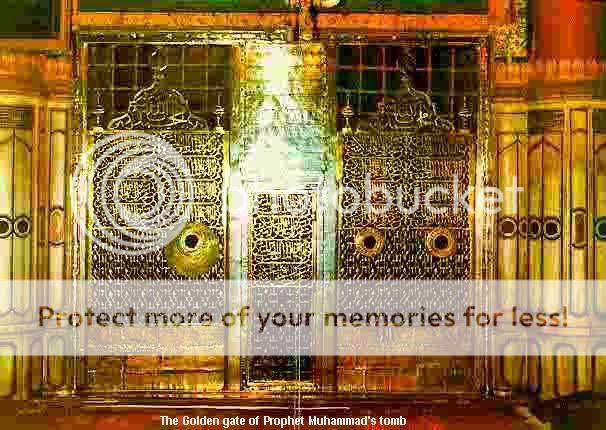
Madinah Munawarra is the City of the Prophet [sal Allahu alayhi wasallam] because he emigrated and died there and is buried there. Owing to the presence of the Messenger of Allah [sal Allahu alayhi wasallam], countless blessings and mercies descend on the City of Radiance (Madinah Munawarrah). The greatness regarding the City of Radiance hinges on the aforesaid fact. Qadi `Iyad states in al-Shifa', in the chapter on visiting the Prophet, the consensus of the Muslims whereby the site of the Prophet's grave is the holiest site on earth. In his commentary on Qadi `Iyad, Imam `Ali al-Qari al-Hanafi writes: "There is no doubt that Makkah, among the highly venerated sanctuaries, is preferable to Madina itself, except for the mound of the Prophet's grave, which is mercy and tranquillity: for it is better than the Ka`ba or rather, better than the Throne itself according to a large group of the scholars." Ibn `Aqeel al-Hanbali (1040-1119 c.e.) said, according to Ibn al-Qayyim in his Bada'i` al-fu'ad: "Nothing is like the Hujra [Prophet's room] by Allah! Not the Ka’ba, not the Throne and the Throne-Bearers, not the Sixth Paradise [Jannat `Aden], and not the Revolving Universes, for in that Hujra there is a BODY more precious in the balance than this world and the next." It was for this reason that our scholars came to Madina Munawwara and performed the ritual prayers in the Masjidun Nabwi after the pilgrimage. Thereafter they received blessings by visiting the Rawza Mutahhara, the Minbar al-Munir and the Qabr Shareef, in short, all the places where Prophet (sal Allahu alayhi wassallam) sat or walked and even leaned against such as the pole when the revelations came. They also visited the places where the Sahaba kiraam ® and the Tabiin walked and so on. The scholars, ulema and sulaha who came later also followed suit. As such, the pilgrims have been visiting Madinah Munawwara throughout the Islamic history.

Historically, after the Prophet (sal Allahu alayhi wassallam) died, he was buried in Aisha's ® room which in his time, was out of the Masjid. There were expansions during the time of Hadrat Umar ®, and then in Uthman’s ® time. Aisha ® blocked access to the grave so that no-one might pray at the grave-site, heeding the warnings of the Prophet (sal Allahu alayhi wassallam). The Companions' enlargement made it physically possible to face the qibla and the grave at one and the same time while inside the mosque. However, Aisha ® re-oriented her room and eliminated any confusion so that it might not be feasible to pray while facing the grave. Later, during the time reign of Caliph al-Walid ibn Abd al-Malik (705-715 c.e.) he, on the advice of his brother-in-law Umar bin Abdul Aziz, expanded it further so that the noble tomb was inside the Masjid.


A hadith relates: "The best of my Community are those of the century [qarn] wherein I was sent, then those that came after them [this applies to al-Walid]" (Muslim 7:184). Among those included in those centuries, were the Amir al-Walid who was one of those "that came after the Companions, " and as for Umar bin Abdul Aziz, some scholars even consider him as the Fifth Rightly-Guided Caliph! The Sahaba did not call into question the fact of the Prophet's Mosque being the site of his grave, during their time, nor did the Tabi'een. The last of the Sahaba (may Allah be well pleased with them all), Abu al-Tufayl `Amir ibn Wathilat al-Laythiyy, died in the year 100 A.H. according to the authentic reports. [al-Nabahani (1265-1350H) in al-Anwar p. 440.]


Imam Nawawi (Reh.) states in his Kitab al-Adhkar:


Know that it is incumbent upon every pilgrim to go and visit the Prophet, whether this visit is on his way or not. Indeed, the visit of the Prophet is among the most important of the acts that draw one near to Allah and of the most gainful of errands and of the most excellent of quests. Once one turns his steps to visit the Prophet [sal Allahu alayhi wasallam], let him invoke abundant blessings on him while on the way. As soon as his sight reaches the trees of Madina, he invokes even more blessings. He is to ask Allah to benefit him through the ziyarah of him (i.e. Allah’s Apostle) and to make him successful in both worlds as a result of it. He is to say: “O Allah! Open for me the doors of your Mercy, and provide for me from the ziyarah of the grave of Your Prophet what you provided to Your Friends and Devotees, and forgive me and show mercy to me, O the best to ask for one’s needs. [Imam al-Nawawi in his al-Adhkar (Dar Ibn Kathir: Damascus, Beirut), first edition, annotated by Muhyi al-Din Muttaqi, p. 333]

Imam Nawawi also says in his Adhkaar: “It is a sunna to visit frequently the shrine of the Prophet [sal Allahu alayhi wasallam] and of the pious Muslims and to stay long near such places of visitations.” (page 98). This fact is strongly supported by the Hanbali sources too, including al-Qudama's al-Mughni (3:297)! Imam Nawawi emphasizes that even from the outside the act of gazing at the Green Dome is an act which will be rewarded by Allah – Subhan Allah!

The Sunni Ulema have stated that since the Holy Prophet [sal Allahu alayhi wasallam] used to visit the martyrs at Uhud, it is “ibaadah” to visit the grave of the Prophet [sal Allahu alayhi wasallam]! Imam Sakhawi points out in Qawl al-Badi that there is an agreement among the Imams from the time of the veil of departure of the Prophet [sal Allahu alayhi wasallam] until our own time that visiting Prophet [sal Allahu alayhi wasallam] is among the best acts of drawing near to Allah. According to Shaykh Ibn Humam al-Hanafi (d.861 A.H.), visiting the Hujrat as-Saada is a very honourable “Ibaada”. Regarding the intention, he wrote in Fat’hul Qadeer that the intention should only be to visit the grave of the Messenger of Allah [sal Allahu alayhi wasallam]. Visiting the Prophet's grave is permissible and praiseworthy in Islam according to the massive majority of the scholars of Ahl al-Sunna, as the following translated excerpts establish beyond doubt.


In his reference book for the fiqh of the four School entitled al-Fiqh `ala al-Madhahib al-arba`a (p. 711-715), `Abd al-Rahman al-Jaziri writes at length about the many benefits of visiting the Prophet's grave and of the importance of the visit. He says that it is among the great actions which Islam, the pure religion, encourages. He also says that it not a secret that that visiting the Prophet's grave is more beneficial to those endowed with understanding (ulu al-albab) more than any other experience. He cites many sayings on the recommended acts of the visit and its proper adab: Let the visitor imagine the Prophet's magnificent and generous form, as if he is sleeping in his grave, knowing him (the visitor) and hearing his words. Only then does he say: Peace be upon you, O Messenger of Allah... and the visitor conveys to the Prophet the greetings of those who asked him to send Salam to the Prophet, so he says: Peace be upon you, O Messenger of Allah, from [name of person] the son of [name of parent] who seeks shafa'a (intercession) with you to your Lord, therefore ask for his shafa`a for all believers....


According to Imam Abu Hanifa (Reh.), one should perform the Haj first and then go to Madinah Munawwara and visit the Messenger of Allah [sal Allahu alayhi wasallam]. The same is written in the fatwa of Abu 'l-Laith as-Samarqandi. Qadi 'Iyad, author of the book Shifa'; Imam an-Nawawi, a Shafi'i alim; and Ibn Humam, a Hanafi alim (rahimahum-Allahu ta'ala), said that there had been ijma' al-Umma on it being necessary to visit the Blessed Grave. Some 'alims said that it is wajib,' and according to Hanafi ‘alims, it is sunnat.

In the famous Hanbali text ‘Daleel-al-Taalib’ after the chapter on Haj it is stated: ” it is masnoon (sunnat) to visit the tomb of Rasulullah Sal’am and his two companions”. In ‘Nailul Ma’aarib’ which is the commentary of the above work it is explained: ‘obviously to visit these tombs it is mustahab to travel to Madina.

Similarly in the Hanbali kitaab ‘Rowdhul Murabbaa’ it is written: ‘It is mustahab to visit the sacred tomb of Rasulullah Sal’am and the tombs of his two companions, because it is related in the Hadith: “The person who performs Haj then visits my grave, is like he who has visited me during my life time.”

On the question of whether facing the qibla or facing the blessed grave during the visit, Imam Abu Hanifa (reh.) wrote this hadith in his book Musnad: "Abdullah ibn 'Umar ® said, 'It is sunnah to turn towards the Prophet's (sal Allahu alayhi wassallam) grave, one's back being towards the qiblah.'" Imam al-Azam Abu Hanifa (reh.) said: “I was in Madina. Shaykh Ayyub as-Sahtiani, one of the sulaha went into the Masjid. I followed him. Hadrat Shaykh as-Sahtiani faced the blessed grave and stood with his back to the qibla. Then he went out. In fact, it is mentioned in Wafa al-Wafa of al-Samhudi that Abdullah bin Mubarak (reh.) said that he had heard from Imam Abu Hanifa (reh) that when Ayyub Sahhtiani went to visit the sacred grave of the Messenger of Allah (sal Allahu alayhi wassallam) he watched him.  He saw him standing with his back to the Qibla, facing the grave.  In this position, he found him weeping ceaselessly and without uttering a word. 


This indicates not only that it is sunnah to visit the grave of the Prophet (sal Allahu alayhi wassallam) but it is also sunnah to turn's one face towards his holy face.


Hadrat Ibn Jamaat wrote in his book Al-mansak al-kabir, "While visiting, after performing a salat of two rak'as and praying near the minbar (pulpit), you should come to the qibla side of the Hujrat as-Saada and, with the Prophet's ('alaihi 's-salam) blessed head on your left, you should stay two meters away from the wall of the al-Marqad ash-Sharif (the Prophet's shrine), then, leaving the qibla wall behind and turning slowly till you face the Muwajahat as-Saada, you should greet him. This is so in all the Madhhabs."


Likewise, when Imam Malik was asked the following question by the Caliph Abu Ja`far al-Mansur: "Shall I face the qibla with my back towards the grave of the Messenger of Allah when makind du`a (after salams)?" He replied: "How could you turn your face away from him when he is the means (wasila) of your and your father Adam's forgiveness to Allah on the Day of Resurrection? Nay, face him and ask for his intercession (istashfi` bihi) so that Allah will grant it to you as He said: ‘If they had only, when they were wronging themselves, come unto thee and asked Allah's forgiveness, and the Messenger had asked forgiveness for them, they would have found Allah indeed Oft-returning, Most Merciful (4:64)’." [Narrated by Qadi Iyad in ash-Shifā (2:596), Subkī in Shifā’-us-siqām fī ziyārat khayr-il-anām, Samhūdī in Khulāsat-ul-wafā, Qastallānī in al-Mawāhib-ul-laduniyyah, Ibn Jamā‘ah in Hidāyat-us-sālik and Ibn Hajar Haythamī in al-Jawhar-ul-munazzam and Tuhfat al-Zawwar, and others.]


Hadhrat Shaykh Muhiyyudeen `Abd al-Qadir al-Jilani al-Hasani al-Hanbail writes the following in the section on entering Madina at the end of the section on the Pilgrimage in his book al-Ghunya li talibi tariq al-Haqq `azza wa jall: Then let him come to the grave of the Prophet and stand in its proximity so that he will be between the grave and the Qibla, and let him stand so that the facade of the Qibla will be behind him and the grave in front of him exactly facing his face, and the minbar to his left.


The Fitna against Visiting the Prophet (sal Allahu alayhi wassallam) Grave:


At this stage, it is pertinent to point out that according to Ibn Taimiyya (d.1328 c.e.) starting a trip to visit our prophet is a sin which invalidates the shortening of the Salah during the trip. Before Ibn Taymiyah, no Muslim had said what he said. His heresies, which are many, such as the Creation existed eternally with Allah or that Allah has a “Hadd”, i.e. limitations He knows, assigning a body and creaturely movments to Allah, etc, were lapped by Muhammad ibn Wahhab an-Najdi (d.1792 c.e.) and his followers who are generally called the Wahhabis but who also use such names as Salafis in Turkey, Ahl-e-Hadith and Mujahid in India, Deobandi in Pakistan, Muhammadiyah in Singapore, and so on. Thus the Wahabi scholars cite this hadith: "Do not travel except to three mosques. Ibn Taimiyya misinterpreted this hadith narrated in al-Bukhari. Due to his ill-understanding of this hadith, Ibn Taymiyah claimed that it means that one is not allowed to travel except to those three mosques: the Aqsa Mosque, the Prophet’s Mosque, and the Haram Mosque (in Makkah). His declaration that it is prohibited to travel for the Ziyarat of the Holy Prophet [sal Allahu alayhi wasallam] finds echoes among all the Wahabi scholars. For this Ibn Taimiyya was jailed in 726 A.H. Indeed, as stated by Ibn Hajar Asqalani in Fath al-Baari, this was one of the ugliest matters reported by ibn Taimiyya, whereas the teacher of the former, Zayn al-Deen al-Iraqi, called it a “strange and ugly thing .”

Now this hadith shareef does not forbid travel to places of religious visitation such as the graves where blessings may differ considering the inhabitants of the graves and their rank with Allah (swt). The correct meaning of the hadith is: “One ought not travel to a mosque with the purpose of praying in it, except if one was travelling to one of these three mosques: the Aqsa Mosque, the Prophet’s Mosque, and the Haram Mosque in Makkah.” This is so because the reward of praying is multiplied in these three mosques compared to the reward of praying in other mosques. This is a merit specific for those three mosques and not for any other mosque. What sheds clear light on the meaning of the hadith is another narration of the same hadith that explains the aforementioned one.  What is meant by the Hadith is: The travelling to perform Salah. This is shown by what Imam Ahmad Ibn Hanbal related in his “Musnad” from the route of Shahr Ibn Hawshab, from the marfu’ Hadith of Abu Sa’id: Animals should not be ridden to a masjid in which Salah is sought, except to al-Masjid-ul-Haram, al-Masjid-ul-Aqsa, and my Masjid (al-Masjid-un-Nabawiyy). Hafiz Ibn Hajar said that this Hadith is a hasan Hadith, and it shows the meaning of the previous Hadith. Explaining the Hadith with another Hadith is better than the perversion of Ibn Taymiyah. In his Alfiyyah (Poem of about one-thousand lines) of the Mustalah of Hadith, al-’Iraqiyy said: The best way to explain a text (ayah or Hadith) is by another text (ayah or hadith). No one of the Salaf understood what Ibn Taymiyah understood. Visiting the grave of the Messenger is sunnah whether with or without travelling as for the residents of al-Madinah. The Hanabilah stated, as others did, that the visit to the grave of the Prophet (sal Allahu alayhi wassallam) is sunnah, whether or not one meant to do it with travelling.
Moreover the Prophet (sal Allahu alayhi wassallam) said: “Prophet Isa (Jesus) shall come down from the (second) heaven to Earth and rule Earth justly. Moreover, he will take a route between two mountains to make Hajj or Umrah and come to my grave. He will say: As-Salamu alaykum to me and I will respond to him.” This hadith is narrated by al-Hakim and Abu Dawudat-Tayalisi. Al Hakim, hafidh adh-Dhahabi, and others classified it as a sahih hadith. This hadith proves that travelling to visit the grave of the Prophet (sal Allahu alayhi wassallam) is not sinful. On the contrary, this is what Prophet Isa (a.s.) will do. By this, it is very clear that no weight should be given to the heretic views of Ibn Taymiyah.

The giant Sunni Muhaddithin and Fuqaha at once refuted Shaykh Ibn Taymiya by authoring books on the validity of visiting the Grave of the Beloved Rasul-Allah and authenticating the numerous Hadiths on the topic.

Some of the major books on Ziyaratun Nabi (sal Allahu alayhi wasallam)are as below: 

1. 'Shifa us Siqam fi Ziyarat Khayr il Anam’ by Imam Taqiuddin Subki Ashari Shafai’ (683-756 A.H). 
The highly brilliant masterpiece of the giant Muhaddith- Imam Subki, it is regarded as one of the first and best written books on the subject.
2. 'Itihaf uz Zayir wa Atraf il Muqim Lis Sayir fi Ziyarat in Nabi’ by Imam Ibn Asakir Ashari Shafai’ Dimishqi (618-686 A.H).
3. 'AtTuhfat ul Mukhtarah fil Radd ala Munkir az Ziyarah’ by Imam Umar bin Abi Aiman Maliki(d. 734 A.H).
4. 'Tuhfat u Zawar ila Qabr in Nabi il Mukhtar’ by Imam Ibn Hajr Haythami Ashari Shafai’ Makki(d. 973 A.H).
5. 'Al Jawahir ul Munazzam fi Ziyarat il Qabr ash Sharif al Nabi al Mukarram’ by Imam Ibn Hajr Haythami Ashari Shafai’ Makki (d. 973 A.H). 
6. 'Al Durrat ul Muziyah fi Ziyarat ul Mustafiya’ by Imam Hafiz Mulla Ali Qari Matrudi Hanafi (d. 1014 A.H)
Its manuscript is available with Shaykh Allama Abbas Razvi, though some starting pages are missing, however, it should still be published. 
7. 'Al Zakhair ul Qudsiya fi Ziyarat il Khayr al Bariya’ by Imam Abdul Hameed bin Muhammad Ali Quds bin al Khatib.
8. 'Al Manhal as Safa fi Ziyarat in Nabi al Mustafa’ by Imam Muhammad bin Sulayman Qabbani.
9. 'Shifa ul Fuwad bi Ziyarati Khayr il Ibad’ by Imam Muhammad bin Alawi Maliki Ashari Makki.  An excellent and detail book which sums up almost all the textual proofs on the topic from the past 1400 years!
10. 'Al A’lam bi Istibab Shadd ar Rihal il Ziyarat Khayr il Anam’ by Shaykh Mahmud Saeed Mamduh Ashari Shafai’ Misri.
11. 'Raf al Minarah li Takhrij al Ahadith at Tawassul wal Ziyarah’ by Shaykh Mahmud Saeed Mamduh Ashari Shafai’ Misri.  The unchallenged masterpiece on the documentation of Hadiths of ‘Ziyarat un Nabi’ and its analysis, it also answers all the modern objections and criticisms on ‘Ziyarat un Nabi’ by the Wahhabiya-Salafiya-Ahle Hadith.
12. 'Iqdd ud Durar fi Fazl Ziyarati Khayr ul Bashar’ by ‘Shirkat Dar ul Mashari’y’, Lebanon.

The misinformation propagated by the wahhabis that the journey to Madinah Munawwara for visiting Prophet [sal Allahu alayhi wasallam] “is not an obligation” is dangerous and wholly inaccurate. Just think, for the early Salafs and Khalafs the important question was whether to begin the Haj by first going to Madinah Munawwara or by first going to Makkah. Among the Salafs who considered it appropriate to begin by visiting the Holy Prophet [sal Allahu alayhi wasallam] were Ilqima, al-Aswad and ‘Amr ibn Maymoon. Imam Nawawi informs us that Imam Ahmad said that the best of Tabiian are ibn al-Musayyib, then Ilqima and al-Aswad.

As for not going to Madinah Munawarra at all it is unheard of, rather, Ibn `Abd al-Barr and al-Baladhiri relate that Abu Bakrah and Ziyad ibn Abih and others intended pilgrimage on a certain year but postponed it when they realized they would be unable to go to Madina Munawwara as well! `Abd al-Haqq al-Ishbili (d. 582) stated that the visit is a sunna wajiba or obligatory Sunna, and as for the schools it differs between wajib (some Malikis and some Zahiris), near wajib (Hanafis), and Sunna manduba (Shafi`is and Hanbalis). [Sources: Samhudi, Khulasat al-wafa' p. 101. Nawawi, al-Taqrib wa al-taysir p. 98-99. Shawkani, Nayl al-awtar 5:94, 97.]

As stated, according to the consensus (Ijma) of the Sunni Ulema “The visit to the Prophet's grave is lawful and it is among the most meritorious deeds.” (Sources: Sa`di Abu Habib, Mawsu`at al-ijma` fi al-fiqh al-islami 2:919. Nawawi, al-Majmu`, al-Idah fi manasik al-hajj and al-Adhkar. Ibn Jama`a, Hidayat al-salik 3:1384f. Ibn Hajar, Fath al-Bari 3:51. Sakhawi, al-Qawl al-badi` p. 160. And even according to Shawkani, Nayl al-awtar 5:97. etc. )

This Heresy in the Indian Sub-Continent: 
The heretical and deviant beliefs of  Ibn Taimiyya and the Wahhabis were introduced in India and actively promoted by Syed Ahmed Rae-Bareilvi, Shah Ismail Dehlavi, and Shah Ishaq Dehlavi in their numerous books through which this heresy gained ground among the masses who were ignorant of the true beliefs of Ahle Sunna wal Jamaat.  The Indian Muhaddithin also contributed immensely in the refutation of this heretical Wahhabian belief through their following work: 
1. Ahsan ul Maqal fi Hadith La Tashadd ar Rihal by Shaykh ul Islam Mufti Sadruddin Azurdah Matrudi Hanafi Dehlavi (d. 1285 A.H).  And
2. Muntahi ul Maqal fi Sharh Hadith la Tashadd ar Rihal  by Shaykh ul Islam Mufti Sadruddin Azurdah Matrudi Hanafi Dehlavi (d. 1285 A.H). 
The above  book contains the endorsements of the great Mutakallim- Imam Fazl e Haq Matrudi Hanafi Chishti Khayrabadi and Shaykh Mufti Sa’adullah Muradabadi.
3. Ikmal fi Bahas Shadd ar Rihal by Imam Fazl ur Rasul Usmani Matrudi Hanafi Quadri Badayuni (d. 1289 A.H)
This book is in answer to eight questions on the matter of ‘Ziyarat un Nabi’ which were forwarded by the Wahhabiya in refutation of ‘Muntahi ul Maqal’ of Mufti Sadruddin Azurdah Dehlavi.
4. Ar Risalat ur Rabiya Fil Hajj, Fasl fi Ziyarat ul Madinah al Munawarrah’ by Imam Bahr ul Ulum Allama Abdul Alyy Farangi Mahali.
5. Al Kalam ul Mabrur fi Radd Qawl ul Mansur by Imam Abdul Hayy Lakhnavi Farangi Mahali.
6.Zahur ul Anwar fi Ziyarat in Nabi al Mukhtar by Shaykh Abul Zafar Sayyid Sharif Quadri Nawshahi.

Muhammad Zakariyya al-Kandhalawi, a Deoband scholar, points out in his Fazail-e-Haj, that Islamic works such as Durre Manthur, Durre Mukhtar, Anwaar-Saati’a, al-Shifa, Muwaahib, Mughni, Sharh-e-Kabeer, Dareel al-Taalib and its commentary Nailul Ma’arib, Rowdul Murabba, Mishkaat, and other works of scholars including Mullah Al-Qari, al-Zurqani, ibn Rajab, ibn Hajar Makki speak favourably regarding the Ziyaarah of the sacred grave of Holy Propet [sal Allahu alayhi wasallam] and his two companions. According to him, in view of the hopes that are expected from the Messenger of Allah [sal Allahu alayhi wasallam] after the veil of departure and his countless favours on the Ummah, it would be unfortunate if the Ziyaara is not made despite one’s abilities. [Generally, Deobandi group, while admitting that the Wahhabis use most insolent language in respect of Prophethood and the person of the holy Prophet (sal Allahu alayhi wassallam) holds that having a vision of the blessed Prophet (sal Allahu alayhi wassallam) and visiting his blessed tomb are bad innovations and unlawful. [Shaykh Hussein Tandvi al Deobandi , Shihabus Thaqib,Page 45 and 47]

Hafidh Asqalani says that:

The Scholars have said, “How can Hafidh Ibn Taymiyyah say that it is Haraam to visit our Prophet [May Allah bless Him and grant Him peace] grave”. In this instance the Scholars have really rebuked Hafidh Ibn Taymiyyah. And on this saying of Hafidhh Ibn Taymiyyah it created a lot of disagreement between the Ummah. As all the Scholars agree unanimously that it is permitted to travel to visit our Prophet (Sallallhu’ alaihi wa sallams) grave. The evidence Hafidh Ibn Taymiyyah gave was of Imam Maliks saying that he did not like people saying that they have visited our Prophet (Sallallhu’ alaihi wa sallams) grave. As the Maliki Scholars have cleared this by saying that Imam Malik did not like the word Visit (Ziyarah) being used, he was not against the actual visiting of the grave. Imam Malik knew about visiting our Prophet (Sallallhu’alaihi wa sallams) grave is the best sort of worship you can do to become closer to Allah Ta’ala. And he also knew that the whole of the Ummah is together on this issue.
[Fathul Bari chapter Al-Masajid by Hafidh Asqalani]

Shaykh Alawi Maliki writes:

That some people have wrongly interpreted what Imam Malik Rahamatullah has stated: He said that: ‘I do not like people saying that I have visited the Ka’ba, or that I have visited our Prophet [May Allah bless Him and grant Him peace] grave. The answer to this is that Imam Malik Rahmatullah did not say: do not visit our Prophet [May Allah bless Him and grant Him peace] grave, he did not like the word Ziarah as Ibn Rusan Maliky wrote on this that the word visit (Ziyarah) is used when addressing ordinary deceased, so this is not suitable for our Prophet (Sallallahu’ alaihi wa sallam.) [Shifa-Al-Favar page 130 by Shaykh Alawiy al Maliki Makki]

It would be relevant here to point out an excerpt from Hafidh Imam ad-Dhahabi's letter to ibn Taimiyya - his former Shaykh:

"Oh the disappointment of him who follows you, for he is exposed to corruption in basic beliefs and to dissolution. Particularly if he is short of learning and religion, a self-indulgent idler who does well for you by fighting on your behalf with his hand and tongue, while he is actually your enemy in his being and heart. What are your followers but hidebound do-nothings of little intelligence, common liars with dull minds, silent outlanders strong in guile, or dryly righteous without understanding? If you don't believe it, just look at them and honestly assess them. ...... How long will you praise your own words in a manner you do not even use for the Sahihs of Bukhari and Muslim? Would that the hadiths of the two Sahihs were safe from you, as you continually attack them, by suggesting weakness, considering them fair game, or with figurative explanations and denial. Hasn't the time come to give up? Is it not it time to repent and atone?....."

Continued...

NASIR