VISITING GRAVES IS NOT GRAVE WORSHIP PART 26 OF 26.
Part 26: Visiting Grave is Not Grave Worship – Continued:
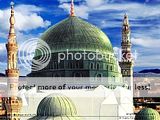
Branding the real Muslims who visit the Holy Prophet (sall Allahu alayhi wassallam) in Madinah Munawwara and the graves of Prophets (a.s.), the Awliya-Allah, the Martyrs, the Pious, and those of ordinary Muslims as grave worshipers is slanderous and a blatant lie because no Muslim from the time of the Holy Prophet [sal Allahu alayhi wasallam] till now ever considered these graves as places of worship.
There is not in any of these practices one thing which calls for labeling as an unbeliever a Muslim bearing witness that there is no god but Allah and Muhammad is the Messenger of Allah. I do not think that even the uneducated and gullible among people, not to mention the learned person versed in Islamic Law, is ever so impelled by his ignorance as to intend, by his visitation of a grave, to worship it; nor that he would ever believe that the grave itself accomplishes his need and creates what he wants. No one has ever seen any Muslim praying towards a grave while considering it as a Qibla which is the direction faced during prayers. The people at the Awliya’s tombs are engrossed in remembrance of Allah They have not changed their deity nor do they say there are two gods. They worship Allah at this place because it is a blessed and purified place. The place is associated with one of the beloved ones of Allah. It is a sign that reminds us of this great personality who is the dweller of this place. They do not consider Awliya Allah as Idol gods.
Billions of Muslims prayed in Madina near the Noble Grave. As for the licitness of praying in a mosque that contains or is located near the grave(s) of one or more righteous persons, it is established in the hadith of the Prophet (sal Allahu alayhi wasallam): "In the Mosque of al-Khayf there is the qabr of seventy Prophets." Narrated from Ibn `Umar by al-Tabarani in al-Kabir and al-Bazzar with a chain of trustworthy narrators according to al-Haythami in Majma` al-Zawa'id (#5769, #5965).
The same Nabi Muhammad, sall-Allahu `alayhi wa sallam, who instructed us to destroy all the idols also instructed us to kiss the black stone - not for worship - but because of the stones closeness to Allah, subhana Hu wa Ta`ala. We draw an analogy between this stone and the tombs of the Awliya. The Ka'bah is also a stone building. We pray towards it and do the tawaf around it. Does that imply worship? No! The Ka'bah represents the presence Allah, subhanaHu wa Ta`ala, just as the shrines of the Awliya are places where Allah's, subhanaHu wa Ta`ala, Rahmah descends. We also pray at the Maqam Ibrahim, as we are clearly instructed to in the Holy Qur'an (1:125): "And take Maqam Ibrahim as a place of Prayer" (wat takhizu min Maqam Ibrahima Musalla ) . Maqam Ibrahim is merely a large slab of stone containing the footprints of Nabi Ibrahim, `alayhi-s-salam. It is thousands of years old, and is not even a grave, nor the physical feet of Nabi Ibrahim, `alayhi-s-salam. Is praying there Shirk or Kufr? If not, then why condemn praying at the tomb of Nabi Muhammad, (sal Allahu `alayhi wasallam), and the Awliya of his Ummah! Also just because there is a grave in the mosque does not mean that Muslims are worshipping the grave.
There are so many relics and structures around Ka’ba.The Hajar el Aswad (the blackstone) . Opposite the N.W. a semi circular wall of white marble where the graves of Prophet Ismael (a.s.) and his mother Bibi Hajara are located. To the N.E. , is the Maqam-e- Ibrahim where marks of his feet are miraculously preserved. Just because they are in the vicinity of Ka’ba; it does not make them objects of worship. They just happen to be there. Even Kaaba is a Qiblah. The direction God told us to face when we pray to Him. We just worship Him...Ibn Hisham narrates that when Nabi Muhammad (sal Allahu `alayhi wasallam) had passed away, Sayyidina Abu Bakr As-Siddiq, radi Allahu `anh, went to kiss his forehead and said, "How blessed and perfumed are you when you are alive, and how blessed and perfumed are you when you have passed away." Was he making Shirk?
Prophet (sal Allahu `alayhi wasallam) said: "You gain no victory or livelihood except through (the blessings and invocations of) the poor amongst you". (Exact words of the Saudi Validated translation by Muhsin Khan). Yes, ultimately Allah is the only Protector and Helper but the Anbiya and the Awliya are the attracters and the reflections of His help and protection. Only an ignoramus can deny this.
It would be relevant to also point out an excerpt from the March 22, 1980 Fatwa of Shaykh Salih al-Na`man, of Syria: "The Community has reached consensus on the fact that tawassul is permissible when belief is sound (idha sahhat al-`aqida), and the consensus of the Community is a legal proof (ijma` al-umma hujjatun shar`iyya); as the Prophet (sal Allahu alayhi wassallam) said: "My Community shall not agree on an error.” As for the claim of some extremists (ghulat) of the Wahhabiyya whereby the law's position with regard to the person who makes tawassul is that it is shirk (worshipping other than Allah together with Him): there is no proof for such a claim either legally or rationally, because the person who makes tawassul does not contravene the Prophet's order: "If you ask, ask Allah, and if you seek help, seek help from Allah." Rather, he is asking Him through one beloved to Him in order that his supplication be answered, and this is what our Lord Glorious and Majestic likes from us. How then can we judge that he is committing shirk when he is not a mushrik (one who commits shirk). Such act the law considers abominable and our religion declares itself innocent of it, because it has been said: "Whoever declares a believer to be an disbeliever has committed disbelief." After giving certain examples, he concludes: From this and other narrations we conclude that some of the Wahhabis today may be guilty of hastening to accuse others of disbelief (takfir), as they have done in the past with hundreds of thousands in the Hijaz whom they massacred even as they were saying La ilaha illallah, and as the Kharijis have done in the time of our Master `Ali -- may Allah ennoble his face. "In short, tawassul is not prohibited, rather it is legally commendable (mustahsanu shar`an), and it is not permitted (la yajuz) to cast the label of shirk on the believer. This is what will be found in the established books of Islamic law. And Allah knows best."
Imam Ramli, for example, holds the position that should a man throw himself onto the grave of a saint, and he is clearly motivated by a spiritual condition (hal) or the man is overwhelmed by an emotion, this act of his is neither munkar, makruh nor, least of all, "shirk". His condition, the Imam says, is like the situation of Sayyidna Bilal who rubbed his face on the grave of the Prophet (sal Allahu alayhi wasallam) upon his return from Syria. Bilal ® was in Syria when the Prophet (sal Allahu alayhi wasallam) passed away. The implication here is that the practice of throwing oneself onto a grave becomes an abuse (munkar) if people ritualize it. But even here the ruling of "shirk" is absent. The view to declare these practices "acts of shirk" betrays a basic confusion between the concepts of "act" and of " belief". The truth is "acts" can never become "shirk" unless they are accompanied by a polytheistic mindset. Even then the "act" as such is not "shirk" - the "belief" or "mental orientation" is. The "act" is called "shirk" figuratively. It is simply flawed to call any "act" that looks like a bow or a prostration "shirk". If this was true, Bilal ® is also a mushrik. The angels in bowing or prostrating before Nabi Adam (a.s.) and the brothers of Nabi Yusuf in performing sujud, as the Quran says, before him will have to be similarly judged. No doubt, some of todays "petro-dollar shaykhs" would label Sayyidina Bilal ® a "Mushrik", claiming that he was worshipping the Prophet, sal Allahu `alayhi wa sallam! Astaghfirullah. For example, an astonishing deviation of Ibn Baz is in his remarks on Fath al-Bari by his characterizing the visit of the Companion Bilal ibn al-Harth - Allah be well-pleased with him - to the grave of the Prophet - Allah bless and greet him - and his tawassul for rain there as "aberrant" (munkar) and "an avenue to polytheism" (wasîla ilâ al-shirk).” Al-Albani's and Bilal Philips' opinions only represent the wahhabi minority. As Sunni Shaykhs tell us, it is also a fact that Al-Albani is "self-taught" and that he never had a Shaykh to teach him the knowledge of hadeeth. He does not possess a continuous chain of knowledge that goes back to the Prophet (Salla Allahu 'alayhi wasallam) as the other true Sunni huffaz, like Imams Nawawi, Baihaqi, Bukhari, Muslim, Ibn Majah, Tirmidhi, Nisa'i, and Ibn Hajar do. Hence, Al-Albani's interpretations and understanding that "tawassul done by an intermediary who is in his grave is Islamically unlawful" is false and meaningless. The hadeeth of Ibn Mas'ud, related by Imam Ahmad in his "Musnad," states: "Whatever the majority of Muslims see as right, then that is good to Allah, and whatever the majority of Muslims see as wrong, it is wrong to Allah." By this dalil, Al-Albani becomes among the stray and lost sheep because his opinions oppose that of the scholarly Sunni majority.
The so-called scholars from the petro-dollar financed madrassas in response to their Master’s Voice do what they are best at: Spilling venom and hatred at the Sunni Muslims while many get going with their attempt to undermine the traditional Islam by altering the books of the great classical scholars of Islam and expunging from the books of hadiths all those sound traditions that are not agreeable to the innovated creed. Such a list goes on and on headed by creating divisions in the Muslim Ummah by threats, fear and export of terrorism to many countries of the world.
According to Yusuf Hamza, “Unfortunately, the West does not know what every Muslim scholar knows; that the worst enemies of Islam are from within. The worst of these are the khawaarij who delude others by the deeply dyed religious exterior that they project. The Prophet, peace be upon him, said about them, “When you see them pray you will consider your own prayers insignificant. They recite the Quran but it does not exceed the limits of their throat.” In other words, they don’t understand the true meanings. The outward religious appearance and character of the khawaarij deluded thousands in the past, and continues to delude people today. The Muslims should be aware that despite the khawaarij adherence to certain aspects of Islam, they are extremists of the worst type.”
In India, generally speaking, the unsuspecting Muslims fall an easy prey to the sophistry and chicanery of the Wahhabi-inspired sects without investigating their claims. When a Wahhabi oriented person accosts an ordinary or uneducated Sunni Muslim, especially in India confronting him with the Holy Qur’an and its verses the latter is almost won over because here, and as elsewhere, we have great reverence for anything that is attached to the Deen of Islam and it is this emotional nature which is exploited by those who have hardened hearts. An ordinary Indian Muslim, because he doesn’t know the meaning of the Arabic words and doesn’t even know for whom the said verses are intended or that the translations being made before him are loaded with words that advance the Wahhabi creed don’t realize that they are falling into a deep chasm of heresy. Then there is this technique of baiting the boys of impressionable age and extolling their intelligence and making them believe that they are wiser and smarter than their parents and then indoctrinating them into the Wahhabi creed. As a result of this many Muslim homes stand divided.
I am astonished that the subject of Aqida is hardly discussed in the Friday sermons or other gatherings to the extent that it should be done in the Sunni Masjids in our cities. Or even if it is discussed it is just on an emotional level and not on intellectual level. It is true that the ordinary people like me would not understand the “intellectual level”. That is not even required! Just give us some hints that are required to pre-empt the traps set up by a Wahhabi scholar and the sects that follow him. A small lesson about the Ruh (Spirit/Soul), life of Barzakh, punishment and pleasures of the grave world, the Seerat and the teachings of our Beloved Prophet (sal Allahu alayhi wasallam) and the respect and the awe of the Sahaba for him (s); the life of our beloved Prophet (sal Allahu alayhi wasallam) in grave, the true Aqida behind Tawassul/Istigatha, about the imperative need of love for Rasul Allah (sal Allahu alayhi wasallam) and how the Sahaba loved him; the merits and benefits of Durud-o-Salaam; about the Surahs and verses in Qur’an and their true meaning; and the refutations of the Wahhabi scholars by the Sunni Ulema of the past and the present. Examples must also be given of how the texts of the Islamic books are being altered, expunged, interpolated, etc., by the Wahhabi scholars. It cannot be over-emphasized that this subject is the need of the hour and must be given top priority by the Pesh-Imam of the Sunni Masjids in their Friday sermons and special gatherings. Before the advent of Fitnah there was no need for all this and everyone went about the best one could do in the way of Islam.
The Trustees of the Masjids should be good Muslims and true lovers of our Prophet (sal Allahu alayhi wasallam) and the Ahle-Bayt and the Awliya-Allah, and they should never seek financial assistance from the Wahhabi funds. Most of the Sunni Masjids are in state of disrepair so that the Wahhabis offer funds by persuading the Trustees to appoint their own Imam whereafter they take over the Masjids. As for the poor Muslims, they are attracted by the prospect of assured “Daawat” (meal-parties) that are doled out and a chance to roam about in the country and abroad in the name of Daawah where boarding and lodging in their own local mosques are of common occurrence.
Islamic scholars point out that “Even today, if a person or a number of people were to petition the country of Saudi Arabia, they would receive funds or grants if they promise that a Masjid or Madrassah would be built - to teach the Wahabi cirriculum. Or if a magazine would begin to circulate then, it too would receive funds to propagate the Wahabi beliefs. It is in this way, and by currently owning large, well equipped publishing houses, that the Wahabis have been able to mass-distribute and mass-circulate misinformation about the Ahle As Sunnah Wal Jammat and propagate their own beliefs passing them under the guise of “Salafi” Islam. Many, if not all, of their publications are beautifully designed but, this cannot hide the fact that they are continually trying to break Sunni Muslims from a scholarship that has flourished for over 1400 years. The head office of this “organisation” is in the Najd region, that was where Muhammad bin Abdul Wahab was born.” (Alahazrat.net)
It is interesting to note that as posted on PBS.Org. (Frontline House of Saud) about 26 Saudi theologians, including missionaries, Professors and Attorneys addressed the Iraqi people in an open sermon at Friday prayers on Nov. 5, 2004. Among other things they stated:
Imam Muhammad Amin Ibn Abidin, a Hanafi scholar who passed away in 1836 CE, said in his "Hashiyya radd al-Mukhtar," volume 3, page 309: "In our time Ibn Abdl-Wahhab (Najdi) appeared, and attacked the two noble sanctuaries (Makkah and Madinah). He claimed to be a Hanbali, but his thinking was such that only he alone was a Muslim, and everyone else was a polytheist! Under this guise, he said that killing the Ahl al-Sunna was permissible....."
We have seen some of the sound hadiths that say it is forbidden to commit atrocity upon Muslims and that their blood, honour and wealth are inviolable. There is also a hadith shareef that says: Abu Musa Al-Ash`ari reported: I asked the Messenger of Allah (sal Allahu alayhi wasallam): “Who are the most excellent among the Muslims?” He said, “One from whose tongue and hands the other Muslims are secure.” [Sahih Bukhari and Muslim] Yet if one is sincere, one only needs to look into the History Najd and how Saudi Arabia was carved out after slaughtering hundreds of thousands of innocent Muslims in Hijaz, including Makkah, Madina Munawwara, Taif and even Karbala, and how it gained the tacit approval of the murderers’ imperialist masters. Even as late as in 1924 when thousands of Sunni Muslims from Taif were ruthlessly killed, plundered and religious books thrown on the streets. We need not repeat all those incidents here. The History is there for all to see. Warning: Even the history is being changed by the Wahhabi scholars. So get your copy of the true history before it vanishes! But it may be stated that regarding the hadith 'I have been commanded to fight against disbelievers until they say La ilaha illa'llah, this hadith shows that it is not permissible to kill Muslims. The sixth ayat al-karima of Surat at-Tawba declares, 'Free them who make tawba and perform salat and give zakat.' The twelfth ayat al-karima of Surat at-Tawba declares, 'They are your brothers in Islam.' It is declared, 'We judge according to the appearance we see. Allahu ta'ala knows the secret,' in a hadith. Another hadith declares, 'I am not ordered to dissect the hearts of men and see their secrets.' Hadrat Usama ® killed a man who had been heard to have said, 'La ilaha illa'llah'; when Usama claimed that the man had not had iman in his heart, Rasulullah declared, 'Did you dissect his heart?'
As stated before, the fact of the matter is they quote ayah’s like the Khawaarij because they are the Khawaarij. Do they even consider Surah Fusssilaat, ayah 40, where Allah says: “Indeed, those who misinterpret Our ayat are not concealed from Us. So, is he who is cast into the Fire better or he who comes secure on the Day of Resurrection? Do whatever you will; indeed, He is Seeing of what you do.” Do they ponder over the very words of the beloved Prophet Muhammad sal Allahu alayhi wasallam when he said: “What I fear most in my community is a man who interprets passages of the Qur’an out of their context”. Do they reflect over the words of Ibn Abbas, the one who was given direct understanding of the Qur’an three times over when said: “Do not be like the Khawarij, interpreting the ayat of the Qur’an about the common Muslims and it was only sent down regarding the People of the Book and the idol worshippers. So they were ignorant of its knowledge and they used it to spill the blood, seize wealth and make the charge of astrayness against Muslim Orthodoxy. You must have the knowledge of what was sent down by way of these things in the Qur’an.” But one needs to remember that “ It is striking that not one of the great muhaddiths, mufassirs, grammarians, historians, or legists of Islam has emerged from the region known as Najd, despite the extraordinary and blessed profusion of such people in other Muslim lands.”
The Wahhabis claim that in practicing the religion and in explaining and interpreting its laws, one must take inspiration from the conduct and practice of the caliphs, the Companions {sahabah} and Followers {tabi'un} because they are closer to the time of revelation and the Prophet (s). We know that this is nothing but an empty claim and their beliefs regarding ziyarah is contrary to the sayings and practice of the Companions because even after conquering new territories, the Sahaba and the Muslim army never destroyed any graves but in fact preserved them. For instance, when Syria was conquered during the reign of the Hadhrat Umar ® the second caliph, the Muslims preserved the graves of Hadhrat Zakariyya (Zechariah) and Yahya (John the Baptist), peace be upon them, considering them as holy. Similarly, when Jerusalem was surrendered to Hazrat Umar (R), the graves besides the Masjid al-Aqsa were not destroyed or demolished. It is significant to note that in Jordan there are many graves of prophets with domes erected over them. In the occupied land of Palestine, there is the grave of Ibrahim (a.s.). and the graves of Ishaaq (a.s.), Yaqub (a.s.) and Yusuf (a.s.); in Iraq there are the graves of Dhul Kifl (a.s.), Hud (a.s.) and Salih (a.s.). These graves have always been there. These graves have been there with all the Muslims for a thousand years. The question is, if this were misquidance, why did the Muslims not demolish them? The city wall of Constantinople was very high. The Romans were sending fireballs from the top of the wall, which did not let the Muslims make a breach in the wall and enter the city. During the siege, Hazrat Ayub Ansari, who was then 80 years old, fell very ill. He advised his companions that he should be buried as much inside the enemy territory as possible. Following the instructions, the Muslims sent a message to the Romans that if they ever tried to disrespect or mutilate the body of the companion of the Holy Prophet, they would never let them rest. The body of Hazrat Ayub was taken close to the city wall and buried there. But the expedition failed due to the strong fortification of the city. Sultan Mohammad Fateh earned the unique honour of annexing it to the Muslim empire. He thus fulfilled the forecast of the Holy Prophet (peace by upon him): “Verily you shall conquer Constantinople. What a wonderful the leader and his army would be.” The Sultan came to be known as the conqueror of Constantinople. He was only 21 years old at that time. After the victory, the Sultan extended liberal treatment to the city’s Christian population and renamed the city as Istanbul. The first thing the Sultan did after conquering the city was to build a mosque, near the Golden Horn, at the tomb of Hazrat Ayub Ansari, who had died during the Islamic assault on Constantinople.
So who has given permission to the Wahhabis to destroy the Islamic heritages and the graves and shrines of Muslims? Is this the way of taking inspiration from the Salaf-as-Saliheen, namely, to eradicate Islamic legacy and heritage and to systematically remove all its vestiges so that in the days to come Muslims will have no affiliation with their religious history! This is definitely a reprehensible innovation (Bidah) by the Wahhabis.
Sayyid Yusuf ar-Rifa’I, the contemporary Islamic scholar from Kuwait, has in fact tendered advice to the ulema of Najd. He states in Nasiha Li Ikhwanina ‘Ulama Najd (Advice to our brothers, the scholars of Najd): “What shamelessness in his (sal Allahu alayhi wassallam) presence the Day we come to drink from his blessed Basin! Alas! Woe and misery for a Sect that hates its Prophet whether in words or in deed, holding him in contempt and trying to eradicate his traces!” The Shaykh further thunders righteously: “You left none but yourselves as those who are saved – forgetting that Prophet’s (sal Allahu alayhi wassallam) saying: ‘If anyone says the people have perished then he has perished the most’.” This hadith shareef was narrated from Abu Hurairah by Malik, Ahmad, Muslim, al-Bukhari in al-Adab al-mufrad, and Abu Dawood.
It is further painful to note that while Islamic heritages have been destroyed by the Wahhabis, the topographies of Makkah and Madina Munawwara are changing. According to The Independent: "Yet growing numbers of citizens, particularly those living in the two holy cities of Mecca and Medina, have looked on aghast as the nation’s archaeological heritage is trampled under a construction mania backed by hardline clerics who preach against the preservation of their own heritage. Mecca, once a place where the Prophet Mohamed insisted all Muslims would be equal, has become a playground for the rich, critics say, where naked capitalism has usurped spirituality as the city’s raison d’être." According to Sami Angawi, a renowned Saudi Expert on the region's Islamic architecture: “Both [Mecca and Medina] are historically almost finished. You do not find anything except skyscrapers.” Therefore, the Newspaper's headline shrieks: "Islam's holiest site turning into Vegas." As Umar bin al-Khataab (RA) said: "We were the most disgraced of people, and Allah granted us honor with Islam. No matter how much we seek honor in other than that which Allah honored us with, Allah shall disgrace us (once again)."
Rasulullah (sal-Allahu ta'ala 'alaihi wa sallam) foretold all that would happen to his umma till the Resurrection. Among the signs of the Hour mentioned by the Noble Messenger of Allah – Allah bless and greet him and his Family and Companions – in Sahih al-Bukhari is “when the destitute (al-buhm) camelherds compete in building tall structures.” Another version in al-Bukhari has: “when the barefoot and the naked are the top leaders (lit. “heads”) of the people.” In Sahih Muslim: “you shall see the barefoot, naked, indigent (al-`âla) shepherds compete in building tall structures.” Another version in Muslim states: “when the naked and barefoot are the top leaders of the people.” A third version in Muslim has: “when you see that the barefoot and naked, the deaf and dumb are the kings of the earth.” Al-Qurtubi said: “What is meant here is the prediction of a reversal in society whereby the people of the desert country will take over the conduct of affairs and rule every region by force. They will become extremely rich and their primary concern will be to erect tall building and take pride in them. We have witnessed this in our time as well as the import of the hadith: “The hour will not rise until the happiest man will be the depraved son of a depraved father (lukka` ibn lukka`),” and also “if the leadership is entrusted to those unfit for it, then expect the hour,” both found in the authentic collections.” Ibn Hajar said in commenting this passage of the hadith in Fath al-Bari: It was said that “bear-foot and naked,” “deaf and dumb” are their attributes by way of hyperbole, showing how coarse they are. That is, they did not use their hearing or sight in anything concerning their Religion even though they are of perfectly sound senses. The Prophet’s (saws) words: “The heads of the people” means the kings of the earth. Abu Farwas’ narration names the kings explicitly. What is meant by them is the people of the desert country, as was made explicit in Sulayman al-Taymi’s and other narrations: “Who are the barefoot and naked?” He answered: “The Bedouin Arabs.” Al-Tabarani relates through Abu Hamza, on the authority of Ibn `Abbas from the Prophet Muhammad, sallahu alayhi wa sallam, that “one of the signs of the change of the Religion is the affectation of eloquence by the rabble and their betaking to palaces in big cities.” Anas b. Malik narrated that the Prophet said: Dajjal will come and put a camp at a place outside Madina and Madina will shake three times whereupon every Kaafir and hypocrite will go out of the Madina towards him. [Sahih al-Bukhari Vol.9, book 88, Hadith No. 239].
It is worth remembering that the Holy Prophet (sal Allahu alayhi wasallam) has positively and categorically stated that his Ummah will never commit Shirk as the following hadith shows: Uqba ibn Amir reports that the Prophet (peace and blessings of Allah be upon him) left one day and prayed for the martyrs of Uhud. Then he returned to the Minbar and said: ‘I am preceding you. And I am a witness (Shaheed) over you all. I swear by Allah! I am verily looking at the Hawdh Kauthar now. And verily, I have been given the keys to the treasures of the earth, or the keys to the earth. And verily, I swear by Allah! I do not fear that you will commit Shirk after me. But I do fear you will compete and fight with one another.’
(Sahih al-Bukhari; Book of Funerals; Chapter; Prayer on a Martyr)
This sahih hadith states that his umma will never worship idols, that he was assured of it. This hadith ash-Sharif demolishes Wahhabism by the roots, for the Wahhabite book claims that the Ummat al-Muhammadiyya worship idols, that Muslim countries are full of idols, that tombs are idol-houses. It says that one also becomes a disbeliever by not believing that he who expects help or intercession at shrines is a disbeliever. Why did Hadhrat Abu Bakr ® and Hadhrat Umar ® express their desires to be buried near the Rawdah al-Mutahhara of Holy Prophet (sal Allahu alayhi wassallam)? Any how, not believing what the Holy Prophet (sal Allahu alayhi wasallam) said about his Ummah not becoming polytheists is disobedience and rebellion against him (sal Allahu alayhi wasallam) and against Allah (swt) whose beloved Messenger he (sal Allahu alayhi wasallam) is, and it also falsely attributes lies to the one who reported this hadith. Remember! It was Iblis who was the first one to rebel against Allah and his commandment on the so-called ground of Tauhid. Allah tells us how He issued an unconditional command to Iblis to leave the position he held among the highest of heights. He told him that he was an outcast, i.e., cursed, and that he would be followed by a curse that would hound him until the Day of Resurrection. The angels who obeyed Allah and prostrated before Adam pursuant to Allah’s commandment were blessed. Yet the Wahhabis/Deobandis say:
“All Prophets are useless.” (maazAllah) (Taqwiyatul Eeman, page 29).
“If Allah so wishes, he can create millions like Prophet (Salla Allahu Alaihi Wasallam).” (Taqwiyatul Eeman, page 16).
The Prophet is to be respected only as an elder brother.” (Taqwiyatul Eeman, page 58).
“The Prophet was at the end of his wits” (Astagfirullah) (Taqwiyatul Eeman, page 55).
“The Prophet of Allah doesn’t know what will become of him in the end, and he doesn’t know what lies behind the wall.” (Baraheen-e-Qaateah, page 51).
“The knowledge that the Prophet (Sallallahu Alaihi Wasallam) has received from Allah is the kind of knowledge that animals, lunatics and children have.” (Hifzul Eeman, page 7). 10.
“Deobandi Maulvi saved the Prophet from falling (into Hell).” (Astagfirullah) (Bulghatul Hairaan, page 8).
There is no harm in saying "La Ilaha Illalahu Ashraf Ali Rasoolullah" and "Allahuma Salli Ala Sayidina Wa Nabeeyina Ashraf Ali". (Risalah Al Imdaad page 35, month of Safar 1336 H, Roodaad-e-Munaazirah ‘geya’, Al- Furqaan V 3 page 85).
Not being content with insulting the Holy Prophet (sal Allahu alayhi wasallam) they utter further blasphemy:
“Allah does not know beforehand what people will do; after people do something, Allah comes to know about it.” (Tafseer Bulghatul Hairaan, page 157- 158).
Dear Readers: The above blasphemies are just the tips of the iceberg. These have been cited only to show that those who degrade Allah and the prophets while at the same time extolling the Satan directly or indirectly can never be on the right path of Islam. Get away from such groups and sects with all the haste you can. Of course the Sunni Islamic scholars refuted all those blasphemous statements soundly. At least some 250 books were written as a rebuttal to Taqwiyatul Iman in various languages. As has been pointed out, In India, "The movement to protect the Ahlu's Sunnah and to reinstill the respectof the Prophet (sal Allahu alayhi wasallam) in the hearts of Muslims was led by the scholars of Khairabad, Badayun and Bareilly. This movement came into prominence as an answer to the Wahabbi movement and was greatly aided by the Imam of the Ahlu's Sunnah, Maulana Ahmed Raza Hanafi Qadri Barkati of Bareilly, India (d.1340 AH/1921 c.e.) whose immense knowledge and outstanding knowledge saw to it that the creed of Ahlu's'Sunnah, the creed of our predecessors, the creed of our elders prevailed."
Lastly, we shall conclude with the warning given by the Holy Prophet (sal Allahu alayhi wasallam): The Beloved Prophet (Sal Allahu alaihi wasallam) said: "In the period prior to the Day of Judgement, false and deceitful groups will emerge. They will say things to you, which neither you nor your forefathers will have ever heard before. Stay away from these deceitful people and do not let them come near you! Do not be misguided by them and do not let them cause strife amongst you!" (Sahih Muslim)
Allah and his Rasool knows best!
CONCLUDED.
All good is from Allah Ta’ala whereas mistakes are from this humble speck. May Allah Ta’ala bless all readers and May He bring you closer to Him and His Rasul Allah sal Allahu alayhi wasallam. May He accept our humble efforts and may He grant us the capacity to be good and do good. Ameen!
NASIR.
O Allah pray on our Master Muhammad a prayer by means of which we will be saved from every awe-inspiring harmful thing,
and that will take care of all of our needs,
and purify us by means of it from all of our ugly qualities and characteristics
and raise us and purify us by means of it from all of our ugly qualities and characteristics
and raise us up by means of it in Your Presence to the highest of degrees,
and cause us to reach by means of it the extremes of all goodness in our life and after our death
and this prayer be upon his family and his companions
and may he be given safety and much salaam.