A VERY WARM WELCOME VISITORS
Showing posts with label tasarruf. Show all posts

Wednesday, September 24, 2014

Part 4: THERE'S BARAKA IN THE AWLIYA-ALLAH'S GRAVES..


From the Layman’s Desk: Islamic Article No.17:      
Part 4: THERE’S BARAKA IN THE AWLIYA-ALLAH'S GRAVES.

In the Name of Allah, Most Beneficent, Most Merciful.

Praise be to Allah, Lord of all the worlds, and blessings and peace of Allah upon His Prophet and Messenger Muhammad (sal Allahu alayhi wasallam), his Family and all his Companions.

The Awliya Allah have spiritual powers (Tasarruf) but they are limited to their spiritual ranks.  A Shaykh is either Incomplete or Complete. i) An incomplete Shaykh is called a Majzoob. He can only distribute Worldly Faiz.  ii) A complete Shaykh called a Kamil Shaykh. There are three ranks of Kamil Shaykhs.  All the three can distribute BOTH deen and dunya Faiz. The three ranks are as follows:  1) A Kamil Shaykh: one who is complete; 2) A Mukammal Shaykh: one who is perfect; 3) An Akmal Shaykh: one who is the most perfect Wali. The difference is that an Akmal Shaykh, who is at the highest rank, can distribute Faiz to the lower Mukammal & Kamil Shaykhs. So it is often the case that a Kamil Shaykh will do bai'ah to an Akmal Shaykh just for Faiz. It may be added that unless there is Iman and the rules of Shariat are carried out, there can be no Tasawwuf or Tariqat or Awliya.  According to Imam Malik, anyone who dives into Tasawwuf without first learning the Fiqh becomes a Zindiq and anyone who learns Fiqh and abandons Tasawwuf goes astray.  An Awliya who is in high grade Tariqat or Wilaayat has to follow a Mujtahid like an ordinary Muslim.  Hence, Awliya Allah such as Hazrat Bistami, Hazrat Junaid, Hazrat ibn al-Arabi were raised in rank after having followed a Madhhab.  Hazrat Junaid was in the Madhhab of Sufyan Thauri, Hazrat Abdul Qadir Jilani was a Hanbali, Hazrat Abu Bakr Shibli was a Maliki, Haris-e-Muhasibi was a Shafi’I, Imam Rabbani was a Hanafi (May Allah be pleased with them all) and so on.  We also need to point out here that Ali Ajhuri, a prominent Maliki scholar of Egypt, said, ‘The wali, when he is alive, is like a sword in its sheath. After his death, his influence becomes stronger like that of a sword out of its sheath.’ This statement is also quoted by Abu ‘Ali Sanji in his book Nur al-hidaya. It is certified in the light of the Book (Qur’an al-karim), the Sunnat and ijma’ al-Umma that karama is true.  According to Hadrat Khwaja Moinuddin Hasan Chishti ® (530-627 Hijri/1135-1232 c.e.) the world-renowned Awliya of Ajmer in India, the miraculous performances of Awliya remain active and so also his benevolence to devotees after death in the same manner as they were during his lifetime. This is evident from the valuable sayings quoted in Khwaja-e-Aazam, a short biography by Sabri Ajmeri.

It is a common knowledge that even Awliya Allah visit the graves of other Awliya Allah.  Once Hazrat Abul Hasan Ali bin Usman al-Hujveri (the celebrated author of Kashful Mahjub) was entangled in a spiritual mystery and wasn't able to solve it, so he went to the tomb of Hazrat Bayazid Bustami, where he meditated for many days. Due to the grace of Hazrat Bayazid Bustami, he eventually solved the mystery.  During his visit to Syria, he visited the tomb of Hazrat Bilal ®, the great Companion of the Rasulallah (sal Allahu alayhi wasallam). There he slept for a while, and in his dream he found himself in Makkah, where he saw the Holy Prophet (sal Allahu alayhi wasallam) with an old man whom he didn't recognize. Then Hazrat Ali Hajveri fell at the feet of the Holy Prophet (sal Allahu alayhi wasallam) and kissed them. The Holy Prophet (sal Allahu alayhi wasallam) knew what Hazrat Ali Hajveri had in his mind, so he told him: "This man is Abu Hanifa, your Imam." Another example: When Khwaja Moinuddin Chishti (reh.) visited Lahore in 561 A.H (1165 AD), he stayed at the tomb of Hazrat Ali Hajveri for two weeks where he meditated. When he finished his meditation, he said a couplet in Farsi:  Ganj Bukhsh Faiz-e-Alam; Mazhar-e-Noor-e-Khuda/Naqisa-ra Pir-e-Kamil; Kamila-ra Rahnuma.  [Meaning: He is a bestower of treasure (Ganj Baksh) reflecting Divine Light for the salvation of mankind. To the unworthy he is a perfect guide, but to perfect souls, he is still a guide].  Thus Khwaja Ghareebun Nawaaz (reh.) informed the people that the mazaar was a fountainhead of spiritual blessings and that Makhduum Sayyid Ali Hujweri (reh.) is bestowing treasure upon treasure; and his blessings are overflowing.  Hadrat Nizamuddin Awliya, himself a very high-ranking saint, performed the Ziyaarat of Hadrat Qutubuddin Bakhtriya Kaki (reh.) several times and also of Hadrat Fariduddin Ganj-e-Shakkar seven times. (Muslim Saints of South Asia)  As we know, Shah Waliullah often used to visit the graves of awliya for maraqaba and Baraka. He used to visit grave of Shaykh Qutubuddin Bakhtiyar Kaki (reh.) regularly. Shah Sahib also visited the grave of Shaykh Ghaus Gwaliari (rh), the Chief of Sattariya Silsila.  Shah sahib performed maraqaba at the grave of Sayyedina Abu dhar ghaffari (Radiallahu anhu) and the martyrs of Badr.  At one instance Shah Sahab was not able to take a decision. While doing maraqaba at the grave of a pious wali of Allah in the town of Phulat, Shah Sahib got the answer for his question. (Al qawl al jali, p, 232).  From these ( and many more like this) it is seen that Shah Sahab often used to visit the graves of awliya Allah to do maraqaba and get spiritual benefit.  Then, Imam Rabbani Hadrat Mujadad Alf Sani (رحمة الله عليه) while mentioning how the Kashafats of the Sufis may be dangerous for their Iman, speaks of his own experience where he himself suffered such problems for a long time and could not find a way out despite doing Tawbah and Istagfaar and praying before Allah a long time, in order that such Kashafats don't recur.  The resulting fear overpowered him and frustrated him, causing lots of uneasiness.   He says: "This condition remained for a long time.  One day, in this condition I went to the Mazaar (tomb/shrine) of an Awliya and I made the AWLIYA MY HELPER concerning this problem during which time the Mercy of Allah came and I was informed about the Reality of the issue.  And then the soul [Ruh] of Prophet Muhammad (صلی اللہ علیھ وآلھ وسلم) who is Mercy for All worlds came and gave comfort to my heart.  This informed me that only Qurb of Allah is the real blessing. [Maktubat, Vol.3, page 220]"

Next, sometimes objections are raised by bringing in the subject of Destiny.  Of course, everything happens according to His decree and will, and His will is accomplished. The only will that people have is what He wills for them. What He wills for them occurs and what He does not will, does not occur. The destiny which has been termed as Taqdeer Mubarram Haqeeqi  by Islamic scholars is the Final Decision of Allah and is unchangeable – i.e. inevitable Fate!  However, Allah (Subhanahu Ta’la) also says: Allah effaceth what He will, and establisheth (what He will), and with Him is the source of ordinance. (Surah Ar-Rad: 39)  Therefore, it is clear that Allah removes Destiny when He Wills to or lets it remain unchanged in the Preserved Tablet which is with Him.  Hence, the form of destiny termed as Taqdeer Mubarram Ghair Haqeeqi  is changeable by Akabir Awliya Allah. It is in the first book of Bahaar-e-Shariat where it states that Sayyiduna Ghous-ul-A'zam Radi Allahu Anhu state that they have the authority to change 'Taqdeer Mubarram'.  Then, the destiny termed as Taqdeer Mu'allaq is changeable by most Awliya Allah, pious people, which may be with the Blessing of Allah Azzawajal or with the Authority of The Holy Prophet (sal Allahu alayhi wasallam).  It can change by taking care and serving parents and even by giving Sadaqah.  It is in Ahadith that only prayer can change destiny (Tirmidhi) and that indeed dua can change 'Qadha Mubarram' - (Dailimi).   "Nothing could change the qadar except du`a’." (musnad ahmad, vol. 5, hadith no. 277; sunan at-tirmidhi, vol. 3, hadith no. 139).  Ultimately, Destiny is in the Divine Power of Allah Azzawajal. If He Allows, then the Awliya Allah have the authority to change it.  So some may pray or just cast a glance to bring about a change in the fortunes and destiny.  As Dr Muhammad Iqbal said:

Nigaah-e-Mard-e-Momeen se badal jaatee haiN taqdeereN
Jo ho zauq-e-yaqeen paida toh kaTT jaatee haiN zanjeereN.

Next, since the subjects of Faiz, Marifah, Noor, etc.,  are inclusive while discussing about Awliya Allah, it would be relevant before that to discuss or quote in brief something about Tanasukh lest someone might attribute it the Awliya Allah.  At the outset, it should be noted that according to Ahle Sunnat wal Jamaat there is no Metempsychosis and Tanaasukh or transmigration of soul.

The great Indian mystic, theologian and Naqshbandi Sufi Imam-I Rabbani Mujaddid –e Alf Sani  Shaykh Ahmad Sirhindi (1564-1624 c.e.) wrote, in his renowned Persian work ‘Maktubat-i imam Rabbani’ (SECOND VOLUME, 58 th LETTER):  Metempsychosis means that a man's soul has had a connection with another body before it entered his own body. It is not a matter of metempsychosis for a soul to take the shape of a body. ALSO, ANGELS AND GENIES DO MANY THINGS BY DISGUISING THEMSELVES AS MEN, WHICH IS NOT TRANSMIGRATION AT ALL. IT IS NOT REINCARNATION. IT IS NOT A MATTER OF TRANSMIGRATING INTO ANOTHER BODY.  IT IS NOT METEMPSYCHOSIS FOR A WALI TO DO KUMUN AND BURUZ. For in metempsychosis the soul connects with another body to enliven it, to make it sensitive and active. In Buruz,  a soul's connecting with another body is not intended to do this, but it is to perfect that body and exalt its grade. As a matter of fact, a genie can also connect with a man's body and appear in him. But this type of connection is not intended to enliven that person, for that person is alive and is able to hear and move before the genie connects with him. After the connection, some of that person's actions and words are the appearances of the attributes and actions of that genie. By saying nothing about kumun and buruz, great shaikhs avoided causing those ignorant to be dragged into wrong beliefs. Thus Hadrat Shaykh Ahmad Sirhindi has made it clear that the doctrine of Buruz has nothing to do with Metempsychosis and Tanaasukh.

In the physical world, some pious believers who include the Awliya-Allah are able to traverse great distances in moments. Imam ar-Rabbani mentions in his Letters that some awliya were seen far from the place where they lived, and that it was the appearance of their soul in bodily forms. For example, Habib al-'Ajami [d.120H/737 c.e.) who was the disciple of Hasan al-Basri (rahmat-Allahi ta'ala alaih) was seen in Basra on the Tarwiya Day and in 'Arafat on the following day, the 'Arafa Day [the eighth and ninth days of the month Dhu'l-Hijja]. Also, it is commonly known that a Kaamil Wali through the faculty of “Tayy al-Makaan” is able to come to the aid of his disciples wherever by overcoming the spatial restrictions.  In cases of danger the Shaykh might suddenly appear in the midst of a band of robbers to drive them away or assume the shape of the ruler in order to protect a disciple who called for help, or the master might appear, in spiritualized form, at a sick person's bed in order to cure him or at least relieve him temporarily from his pain.  Tayy al-Makaan has been discussed at some length by me at http://tinyurl.com/om84ord

According to the hadith shareef found in Tabarani and Tirmidhi, the Holy Prophet (sal Allahu alayhi wasallam) said: Beware of the insight (Firasa) of the believer for verily he sees by God’s light.  Thus it is known that through his insight, a Shaykh is able to peep into his disciple's heart and tell his secret wishes, hopes, and dislikes and to understand signs of spiritual pride or hypocricy. During our visit to a shrine we often hear the phrase: nazr-e inaayat ho.  Or if you remember the famous qawwali: Ho nigaah-e-karam.  Here we are speaking of Tawajjuh which literally means focusing with intention or spiritual concentration of the mazaar-e-saahib over his seeker who by such transmission of energy is then lifted from his fallen state.  Of course, as we have often repeated, everything is by the Will of Allah Who is the actual Doer.  The Wali is an instrument through whom the grace flows and through whose inner state the transformation takes place.  Therefore, blessings emanated from the soul of a righteous believer or saint, are reflected into the heart of a person who visits his grave, or accompanies him during his life, or uses him as a Wasila. The weaker of the two souls gains strength, just like the reflection of light is able to eliminate darkness from the surface of a mirror.  In the words of an Islamic scholar: The tawajjuh  (concentration) is received when you come to these awliya with love for them for Allah's sake, where you regard them from your heart as your mirrors, and wish for them what you wish for your own self, preferring their will to yours, and in that spirit, greeting them, sitting by their side, and praying for them that may Allah elevate their ranks, and also perhaps reading Quran, sending Salawat or giving charity, all for the love of Allah and seeking Him, and then asking Allah to send the rewards gained to them..and also doing your remembrance of Allah for your own miraj/elevation to Allah in their presence, and all of this will inshallah be causes of connection with their hearts, transmitting their lights to yours, and seeing Allah (swt) through their hearts, may Allah grant us the love of His Prophets, and His Friends/Awliya, and benefit us from their stations and lights.

It may be stated that the reality of Tawajjuh is nothing new.  The Holy Prophet (sal Allahu alayhi wasallam) himself practiced it and there are many accounts about it;   but which cannot be mentioned here for reasons of space limitation.  Therefore, the intermediaries through whom the grace of Allah transmits are not only the Awliya Allah but also the Messengers of Allah and enlightened human being or Insan Kamil.

As an Islamic scholar points out: Similarly Faiz (noor) also gives "life", but in this case it gives life to one's success in this life and/or the next. There are two types of Faiz:  1) Faiz for the World (Dunya Faiz) Low Power: This helps one to have children if one does not have any, be successful in business, become rich, famous etc. 2) Faiz for one's Religion (Deen Faiz) High Power: This helps one succeed in being steadfast in performing Prayer, Conforming to Shariah, Acting upon the Sunnah, Refraining from sinful activities etc. Distribution of Faiz:  A Shaykh can only distribute Faiz according to his status.

According to a great scholar and Wali, Sayyid Abdul Hakim Arwaasi (reh.) (1865-1943 c.e.), faid, marifa and nur flow from the hearts of the men of Allah, who are like the gate of Allahu ta'ala's endless ocean of faid, to the hearts of Muslims who love and remember them.  A Muslim who attaches himself to the heart of a perfect (kaamil) wali will attain Allahu ta'ala's faid  through the blessed heart of that wali.  It does not make any difference for the heart's attaining  faid  and marifa whether the man of Allah is alive or dead. His perfections (kamalat) never depart from his soul. And the soul is not bound by time, place, death or life. Until a man can receive faid  from Allahu ta'ala without a mediator (wasita), he needs a mediator whom Allahu ta'ala loves and who can receive and transmit faid to his disciples.

At this stage,  we shall very briefly broach a word or two about knowledge of the Unseen which is the prerogative of Allah as to upon whom he shall bestow.  In Surah al-Jinn, verses 26-27, of the Holy Qu’ran it is mentioned: He (alone knows the Unseen, nor does He make anyone acquainted with His mysteries, except an Apostle whom He has chosen (Prophet Muhammed sal Allahu alayhi wasallam).  Explaining the above, Ibn Hajar al-‘Asqalani stated as follows: “It follows from this verse that Prophets can see some of the Unseen, and so do the Awliya Allah  (saints) that follow each particular Prophet also, as each takes from his Prophet and is gifted (yukram) with his knowledge. The difference between the two is that the Prophet looks at this knowledge through all kinds of revelation, while the saint does not look upon it except in dreams or through inspiration and Allah knows best.”

Ibn Hajar quotes al-Qurtubi's words confirming this:  The truthful, righteous Muslim (al-muslim al-sadiq al-salih) is he whose state matches that of Prophets and thereby is bestowed (ukrima) some of the same kind of gift they were, and that is to behold the unseen (wa huwa al-ittila` `ala al-ghayb). As for the disbeliever (al-kafir), the corrupt person (al-fasiq), and the contentious one who confuses matters for the listeners (al-mikhlat)-- then no.   (al-Qurtubi as quoted by Ibn Hajar in Fath al-Bari (1989 ed.) 12:449.)

The gist of the above explanations by Ibn Hajr and Qurtubi is that, those who do not believe in the Knowledge of Unseen of Prophets and Awliya Allah are Kafir, Fasiq  and Controversial Troublemakers in the guise of Muslims  groups.

This is no place for a detailed digression on the Knowledge of Unseen that involves the many Quranaic ayahs and ahadith that show that the sources of knowledge of Unseen of Prophet Muhammad (sal Allahu alayhi wasallam) are: (a) Direct, (b) Indirect, and (c) Prophetic Vision. Ibn Abbas reported that Khidr (a.s.) was a man who did all his work with the knowledge of the Ghayb because he knew the Ghayb. [Tafsir Tabari, Tafsir Qurtabi, Tafsir Fathul Qadir, by Imam Tabari, Qurtabi and Qadi Shawkani]. The above statement proves from a narration from a Sahabi, which is accepted by leading and reputable classical authorities, that it is permissible to say about Khidhr (a.s.) that he knew the Ghayb, so how can it possibly be wrong to say that Prophet Muhammad (May Allah bless him and grant him peace) also knows the Ghayb!!  The bottom line is if our Prophet (sal Allahu alayhi wasallam) did not know about the future events up to the Day of Judgment and even after, how else could he have told us about the Mahdi, the Dajjal, the second coming of Jesus, the questions to be asked in the grave, the bridge over Hell which everyone will have to cross to get to Heaven, the Meezan (scales) where everyone’s actions will be weighed etc etc. To quote just three Ahadith Shareef: 1. In the Musnad of imam Ahmad ibn Hanbal by the narration of Abu dharr Ghifaari (radhi allah anhu):  ‘The Holy Prophet (sal Allahu alayhi wa sallam) has left us in this state: that not even a bird flaps its wing, but he has already told us about it’. 2.“..in Sharh of Muwaahib al-laduniyya by al Zarqaani, there is this narration of hazrat Abdullah ibn Umar (radhi allah anhu):  Allah taala presented the whole world before me.  Thus, I am seeing this world and everything which is to happen in it till Judgement Day, as if I am looking at this hand of mine.’ 3. In Mishkah ul Masabih, Vol2, Chapter on Karamaat, followed by the Chapter Wafaat al Nabi alaihisalaam, it is written: ‘Your meeting place is the Hawd-e-Kauthar (Fount of Kauthar). I am seeing it from this very place.’

Coming to the Awliya Allah, Shaykh Ibn Taimiyya who, quoting the saying of Prophet (sal Allahu alayhi wasallam),  considered the Sufis as “Martyrs of Allah on Earth” and as leaders of humanity who called to what is Right, forbidding what is Wrong has this to say about the Unveiling of Appearances in his Majmu’a Fataawa (volume 11, page 313): "Allah Almighty will unveil to his saints states that have never been given before and give them support without measure.... If that saint will begin to speak from the things of the unseen, past or present or future it is considered from "Bab al'ilm al-khaariq" the miraculous unseen knowledge.... Anything that a saint does which is from unveiling to people or to listeners or curing or healing or teaching knowledge, it is accepted... and we have to thank Allah for it."

We shall only be citing just one instance to point out the knowledge of the Unseen granted by Allah to his Awliya Allah. However, before that lets see this hadith shareef: 
Imam Abu Hanifa ® in Fiqh al Akbar and Allama Jalal ud din Suyuti in Jama’ al-Kabeer report from Harith ibn Nu’maan:  ‘Once I (Harith ibn Nu’maan radhi Allah anhu) went to visit the Holy Prophet alayhi salato salaam and the Holy Prophet sal Allahu alayhi wa sallam, asked me, ‘O Harith, how did you find the day?’ I replied ‘By being a true momin (believer).’ The Messenger alaihi salaam said, ‘What is the reality of your Iman (faith)?’ I replied, ‘ As if I AM SEEING THE DIVINE THRONE MANIFESTLY. AND AS IF I AM SEEING THE DWELLERS OF PARADISE GREETING EACH OTHER AND THE DWELLERS OF HELL MAKING NOISE.’  So this was the state of a Sahabi (R)!   Maulana Rumi very aptly alludes to this in his Masnavi: When that is the state of an Atom of the Sun’s’ vision (meaning Hazrat Harith) that he sees Heaven, Hell, the Throne, the Earth, People of heaven and hell with his own eyes, what can one say about the vision of the Sun of the Universe (meaning the Holy Prophet) sal Allahu alayhi wa sallam? “ (p. 148)

 Shah Waliullah Muhaddith Naqshbandi (reh.) [1703-1762] writes that his father, Shah Abdur Raheem, said that he once went to the shrine of Hadrat Khwaja Qutbuddin Bakhtyar Kaaki (rahmatullah `alaih). The soul of Bakhtyar Kaaki became apparent and told me that I shall have a son and that I should name him Qutbuddin Ahmad. At this time, my wife had become elderly and was beyond child bearing age.  On hearing this, I thought to myself that maybe I shall have a grandson. The soul of Bakhtyar Kaaki got to know of my thinking and removed my doubt and said that it did not give me tidings of a grandson, rather, this child will be my very own. Sometime later, I married again and from this marriage was born (Shah) Waliullah. At the time of my birth, my father had forgotten about this event and named me Waliullah.  When he came to recall this event, he gave a second name of Qutbuddin Ahmad. (Anfaas al-`Arifeen, p.110).  By writing about this incident, the belief of Shah Waliullah Dehlwi is clear. He believed that to go to the shrines of the pious is permissible and even after their demise, the saints are still given the knowledge of the unseen because Qutbuddin Bakhtyar Kaaki knew about the birth of a son a year before it happened. Also, the inmate of the grave also knew the feelings of his visitor's heart.

The fact that Prophets and Awliya’ have knowledge of the Unseen (and other miraculous abilitis) is attested to by the Qur’an and Sunna and the experience of the righteous Muslims throughout the centuries of the history of Islam, and does not constitute, as some misguided Muslims claim, kufr or shirk.


Continued in Part 5…


NASIR

Thursday, May 6, 2010

MIRACLES-ISLAMIC PERSPECTIVE IN BRIEF-PART 12 Concluded.

From the Layman's (Nasir Ali) Desk-7: Miracles -Islamic Perspective in Brief- 
Concluding Part-12. 


Miracles after Death:


Short relevant observations were already made before to show the Holy Prophet (sallal laahu alaihi wassallam), as well as all other Prophets (a.s.) are alive in the Barzakh. I say “short” because this is a huge topic by itself and cannot be cited in detail in our subject. However, that can be recapitulated in fine words of the great Mufassir of Quran and commentator of Sahih Muslim Imam al-Qurtubi (rah) who writes:


Translation: Death is not something which brings a total end to something, it is rather transferring from one station to another, the proof of this is that martyrs remain alive after getting killed or dying and they also get happy. “This is the quality of the people who are alive in this world,” so when martyrs are alive then “PROPHETS ARE MORE DESERVING OF LIFE THAN THEM” and it has come in Sahih hadith that Allah has forbidden the earth to consume the bodies of the Prophets, and on the night of Miraaj the Prophet (Peace be upon him) gathered with all Prophets in Masjid ul Aqsa and the Prophet (Peace be upon him) also “SAW MUSA (A.S) PRAYING INSIDE HIS GRAVE” plus the Prophet has also provided the information that “ANYONE WHO SENDS SALUTATION UPON HIM, THEN HE REPLIES BACK”.Other than this, other ahadith also establish “TO CERTAINTY” that the meaning of death given to Prophets is that “THEY DISAPPEAR FROM OUR EYESIGHTS BUT IN REALITY THEY ARE ALIVE AND PRESENT” and their condition is like that of Angels, because Angels are also alive and “PRESENT” and nobody from human beings is able to see them, “EXCEPT FOR THE AWLIYA WHO THROUGH THEIR KARAMAH CAN EXPERIENCE THEM” [al-Mafhim lima Ashkala min Talkhis Kitab Sahih Muslim Volume 006, Page No. 233-4].


Let’s straightway then, come to the Karamaat-e-Awliya after the veil of departure from this world:
There is no disagreement with the fact that the believer's souls in Paradise are capable of instantaneous connection with their graves, and the souls may meet and communicate with other souls of the dead and those sleeping.  It is commonly held by Sunni scholars and even Ibn Qayyim, (1292-1350 c.e.),    ibn Abid-Dunya, Ibn Abdul Barr and ash-Shanqeeti that the dead in their graves have the faculty of hearing a visitor's greetings, his speech, his supplications, et al.  The dead even know about the work of living amongst his relatives and brothers.   The power of the souls corresponds with their own strength and weaknesses, as pertaining to closeness with Allah.  The Holy Prophet (sallal laahu alaihi wassallam) said ‘when you go to the graves of the dead, say ‘Assalamu alaikum ya ahlal quboor’ – meaning ‘peace be upon you O’ people of graves’.  Greetings are given to those who faculties are intact.  In short, there is overwhelming evidence on this subject in favour, but we need to get on with ours at the moment.   


Those who attribute the working of miracles to the Jinn should note that no doubt the Jinn manage to do great work. But they are not so perfect and strong as the souls and the angels. The soul being ethereal (Jism-i- Latifa) is not bound by space and time and comprehends events unperceived by sense organs. The souls are by their graves and are attached to their bodies in an unknown way. They are permitted to effect and dispose of their bodies and also be present in their graves. According to Khwaja Muhammad Hasan Jan Sahib in Tarikh an-Najaat (1976), Mufassareen (exegetes) such as al-Baidawi, has stated in his Tafseer regarding the fifth verse of Surah Naziaat: “(I take an oath) on Those who do hard work” that the souls being immaterial, do the hard work along with the angels by permission of Allah. This is also mentioned in its commentary by Shaykhzada in Tafseer-i-‘Azizi, as well as in Tafseer Ruh al-Bayaan, and in Tafseer-i-Hussaini.


In the prophetic tradition, Ja’far ibn Abi Talib ® after his martyrdom was seen among the angels and they were giving the glad tidings of the coming rains to the people of Beesha. According to another hadith, Ja’far ® came to the Holy Prophet (sallal laahu alaihi wassallam)along with an angel and he had two wings which were blood-stained, and they were going to the valley of Beesha in Yemen. Then there is a long hadith that the Holy Prophet (sallal laahu alaihi wassallam) informed Asma’ bint ‘Umais how her husband, Ja’far, came to him (s) with Jibrail and Mikail (a.s.) and explained how he attained martyrdom; that he had two wings, and that Ja’far ® told him that he flies in and out of Paradise whenever he wished and he also eats the fruits of Paradise, and so on. Therefore, according to Imam Sayuti, the souls are permitted to attach to and dispose of their bodies while they are at ‘Illiyin’ (the Seventh Heaven in which there are believers' souls). These ahadith also reveal that Allah Subhana Ta'la permits his martyrs and pious souls to do the useful deeds for people.


Shah Wali-Allah ad-Dahlawi (rahmat allahi 'alaih), one of the great 'Ulama of India, wrote in his work Hujjatullahi 'l-baligha (vol. 1, p. 35), "When a human being passes away, no relation is left between his soul and the world of matter. The souls return to their origin, become like Angels, and, like them, give inspiration and help to men. They help in the dissemination and strengthening of Allahu Ta'ala's religion. They rush to help those who work for this path. It has been witnessed that they come to help in groups."

‘Abd al-Hakim Arwaasi, a great Islamic scholar and a Wali,  (R) points out that a Muslim who attaches his heart to a perfect (Kaamil) Wali will attain Allah’s “Faid” through the blessed heart of that Wali. Since the souls are not bound by time and place, the ‘kamaalaat’ (perfections) of the Wali do not depart from him even after his death. It makes no difference whether the Wali is alive or dead. The ‘tasarruf’ (disposal or personal initiative) of their souls is by Allah’s ‘tasarruf’ on them. Since the Awliya-Allah are able to perform miracles during their life, they able to do so even after leaving this material world.


Imam Abdullah an-Nasafi has written in Umdat al-Aqai’id that the soul does not change whether in sleep or in death. That is, in sleep as well as in death a Muslim remains a Muslim, a Prophet remains a Prophet. While commenting on the above, ‘Abd al-Ghani an-Nabulsi (Reh.) states in his Al-Hadiqa, that likewise an Awliya is an Awliya whether in sleep or in death, and they possess ‘karamaat’ after they die too.


‘Ali Ajhuri, an eminent Maaliki scholar of Egypt, said:  “A living Wai is like a sword in its scabbard. After his death, his influence becomes stronger in the manner of a sword that is out of its scabbard.”


The above statement is also quoted in Noor al-Hidaaya by Abu’Ali Sanji.


Therefore, the Mu’jizaat (miracles peculiar to prophets) and Karamah of Awliya do not cease after death.


According to Muhammad Thana’ullah al-Uthmani ad-Dehlvi, the author of Irshaad al-Talibeen, the emanation of a ‘Faid’ (benefits) from Awliya does not end but even increases when they die, though for a deficient person to receive such ‘Faid’ sufficiently may be seldom possible.


Muhammad Haadimi (Reh) of Konya (d.1176H/1762 c.e.) who quoted ‘Ali Ajhuri and Abu ‘Ai Sanji in his book Bariqa, maintains the continuance of Mu’jiza and Karamah after death, and that hundred thousands of these have been reported in many valuable books, and that it is permissible to pray to Allah Subhana Ta’la through Prophets and the Awliya.


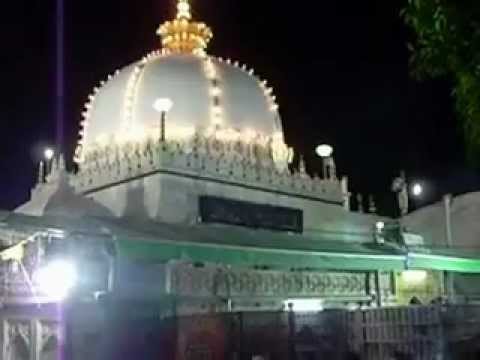
According to Hazrat Khwaja Moinuddin Hasan Chishti ® (530-627 Hijri/1135-1232 c.e.) the world-renowned Awliya of Ajmer in India, the miraculous performances of Awliya remain active and so also his benevolence to devotees after death in the same manner as they were during his lifetime. This is evident from the valuable sayings quoted in Khwaja-e-Aazam, a short biography by Sabri Ajmeri. In fact, in Spiritual Sovereign of India (by Syed altaf Hussein Chishti) it is mentioned that one of the British Viceroys of undivided India, Lord Curzon, has declared in his Memoirs: “There is a grave in India – which rules.” Perhaps he was bewildered by the throngs of hundreds of thousands devotees to Khwaja’s shrine each year and the miraculous power that Allah bestowed upon the spiritual sovereign of India even after his assuming the veil of departure from the material world.


Imam Ghazali (reh) says in Ihya…the spiritual knowledge of the believer is everlasting as the soul of the believer has got no death. By “believers” he means those having great spiritual knowledge and not just the ranks of Muslims with outward faith.


'Allama Shams ad-din ibn an-Nuaym (rahmat-Allahi 'alaih), a Hanafi scholar, wrote in Kitab ar-Ruh, 'Souls may be in a different state other than when they are in their bodies. The souls of awliya' are at Rafiq al-ala and also have a relation with their dead bodies. If a person visits such a wali's grave and greets him, his soul at Rafiq al-ala anwers that person.' This is also noted in al-Imam as-Suyuti's Kitab al-Munjali. All these proofs show that awliya' have powerful tasarruf (disposal) and influence after their death in a way that we may not know.


Sayyid Ahmad al-Hamawi al-Misri [d.1686 c.e. ], a Hanafi alim and the annotator of the book Ashbah, noted in his book Nafakhat al-qurb wal-ittisal bi-ithbati 't-tasarrufi li awliya'i'llahi ta'ala wal-karamati ba'd al-intiqal that the ruhaniyya (spirituality) of awliya' was more powerful than their jismaniyya (physical existence), and they, therefore, could be seen in different places at the same moment. He quoted the following hadith ash-Sharif as a document for his words: 'There are people who will enter Paradise through every gate. Each gate will call them to itself,' upon which Abu Bakr as-Siddiq (radi-Allahu 'anh) asked, 'Will there be anyone to enter through all of the eight gates, oh Rasulullah?' and Rasulullah (sallal lahu alaihi wasallam) answered, “ I hope you will be one of them.” One can appear in different places at the same moment when his soul acquires the power of having a connection with his original position in 'alam al-amr. Since the soul's interest in the world decreases when a man dies, his soul becomes more powerful. It becomes easier for him to appear in different places at the same moment.  Jalal ad-din as-Suyuti, a Shafi'i scholar, says in his book At-Tabaqat al-Kubra, 'The twenty-second kind of karamat is that awliya' can appear in forms of different persons.   "Khalil ibn Ishaq al-Jandee (reh. death 1365 c.e.) a Maliki scholar and author of the book Mukhtasar, wrote, 'The ability to appear in various forms is given by Allahu ta'ala to a wali when he becomes perfect. This is not impossible, because the images that are seen in different shapes are non-material; the body is not seen. Souls are not material and do not occupy a place in space.' A tradition reported in Musnad of al-Bazzaaz with a fair (‘Hasan’) chain on the authority of Anas ® which is also cited by Sakhawi says that the Prophet (sallal laahu alaihi wassallam) said: “Allah has servants who know (the truth of  about people) through reading the signs (tawassum). The above hadith has been reported by others too.


According  to Shaykh ‘Ali Mahfooz (d.1361/1942), a scholar of Al-Azhar University, stated in his Al-Ibda’ that irrespective of the fact that the Awliya are dead or alive, Allah the Exalted blesses the ones whom He will, and through their ‘karamaat’ He cures the ill, rescues those who about to be drowned, helps those who are against the enemy and makes lost things found. He considers this not only logical but also supported by the teachings of the Holy Qur’an.


Imam Ghazali (reh) that a person who was made an intermediary and gave 'faid' could be made an intermediary and he could give 'faid'  after his death, too.   One of the superior great shaikhs said that he had seen four great Awliya who were active after death as well as when they were alive:  two of these were Hazrat Maruf-i Karkhi and Hazrat Abd-ul-Qadir Jilani ®.


I will have to conclude the topic at this stage since it will otherwise be stepping into the realm of Soul, Visiting the Graves, Wasila, istaghasa, and intercession all of which are interlinked and true, and which are huge topics by themselves.  However, do take care not to fall prey to those who belittle the Awliya-Allah and their miracles or those who say that no miracles were vouchsafed to the Sahaba and early Muslims, and those who belittle the miracles by explaining them as natural causation.     


Allah and His Rasool know best.


CONCLUDED


O Allah pray on our Master Muhammad a prayer by means of which we will be saved from every awe-inspiring harmful thing, 
and that will take care of all of our needs,
and purify us by means of it from all of our ugly qualities and characteristics
and raise us and purify us by means of it from all of our ugly qualities and characteristics
and raise us up by means of it in Your Presence to the highest of degrees,
and cause us to reach by means of it the extremes of all goodness in our life and after our death
and this prayer be upon his family and his companions
and may he be given safety and much salaam.


NASIR